
Fort William Statues, Art & Landmarks: A Town Centre Walking Guide

Discover the Stories Hidden in Fort William's Town Centre
Many visitors come to Fort William as the gateway to Ben Nevis, Glenfinnan and the Isles, but a stroll through the town centre reveals a fascinating collection of public art, sculptures and local stories that reflect the area’s unique history and character.
As you explore the High Street and surrounding streets, you’ll discover monuments celebrating legendary Highland figures, remarkable local achievements and the outdoor adventures that have helped make Fort William famous around the world.
The New High Street Mural
One of the newest additions to Fort William’s town centre is the striking mural at the end of the pedestrianised High Street. Inspired by Lochaber’s heritage, wildlife and community, the artwork celebrates the area’s strong connection to the landscape that surrounds it. The design draws on the symbolism of the native sessile oak, which has long featured in local traditions and the town’s identity.

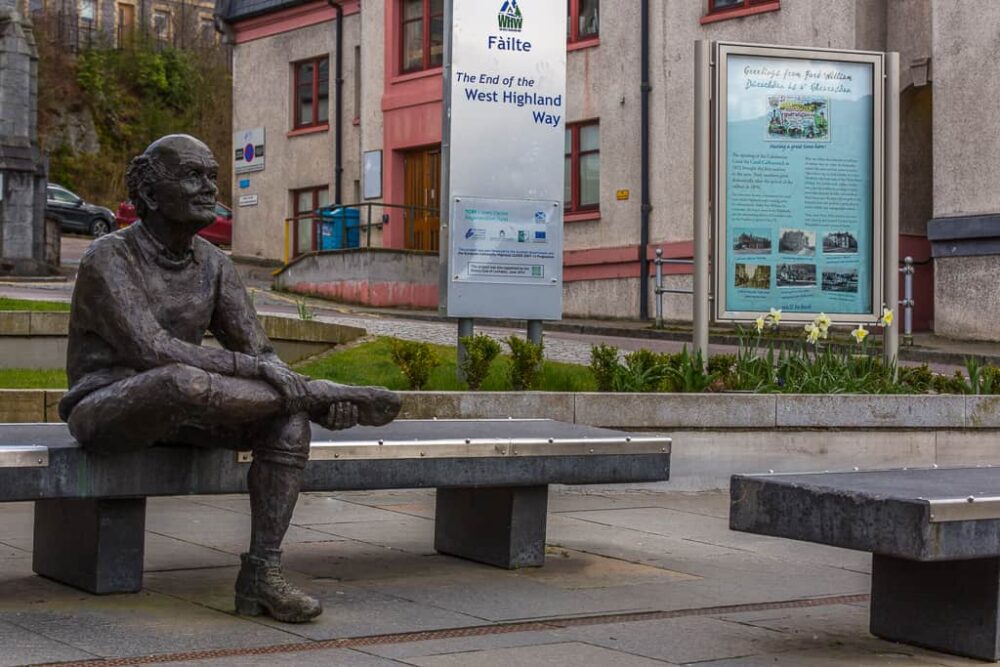
“Sore Feet” and the End of the West Highland Way
At Gordon Square, near the waterfront end of the High Street, you’ll find one of Fort William’s most photographed landmarks: the bronze sculpture known locally as “Sore Feet”.
Created by Scottish sculptor David Annand, the statue depicts a weary walker resting on a bench while examining his tired feet. Installed in 2010, it marks the official finish of the 96-mile West Highland Way, Scotland’s most famous long-distance walking trail.
Every year thousands of walkers complete their journey here after trekking from Milngavie, just outside Glasgow. Many celebrate by taking a photograph alongside the sculpture, making it a symbol of achievement, endurance and Highland adventure.
The Bronze Ford in Cameron Square
A short walk away in Cameron Square stands an unusual sculpture that often surprises visitors: a life-sized bronze Model T Ford.
Known as “The Bronze Ford”, the sculpture commemorates one of the most remarkable motoring stories in Highland history. In 1911, Henry Alexander Jr. drove a Ford Model T from Fort William all the way to the summit of Ben Nevis in a daring publicity stunt. It took five days to reach the top and became an internationally reported feat of both engineering and determination.
The bronze sculpture stands close to the location where the vehicle began its extraordinary climb. Visitors can even sit inside the sculpture for photographs, making it one of the town’s most popular family attractions.


The Historic Statues of the Parade
The Parade, the attractive green space linking the High Street with Loch Linnhe, contains two significant monuments that tell important stories from Fort William’s past.
Donald Cameron of Lochiel
Standing proudly in front of Duncansburgh Church is the bronze statue of Donald Cameron of Lochiel, the 24th Chief of Clan Cameron. Erected in the early twentieth century, the monument honours a respected Highland leader, parliamentarian and Lord Lieutenant of Inverness-shire.
Fort William War Memorial
A Walk Through Fort William’s Living History
Together, these sculptures and artworks tell the story of Fort William in a way that guidebooks often miss. From Highland clan chiefs and wartime remembrance to pioneering motorists and long-distance walkers, each landmark reflects a different chapter in the town’s history.
Whether you’re exploring after a day on Ben Nevis, waiting for the Jacobite Steam Train, or enjoying the shops and cafés of the High Street, take time to discover these remarkable pieces of public art. They offer a deeper insight into the people, events and traditions that have helped shape Fort William into the vibrant Highland town visitors enjoy today.