
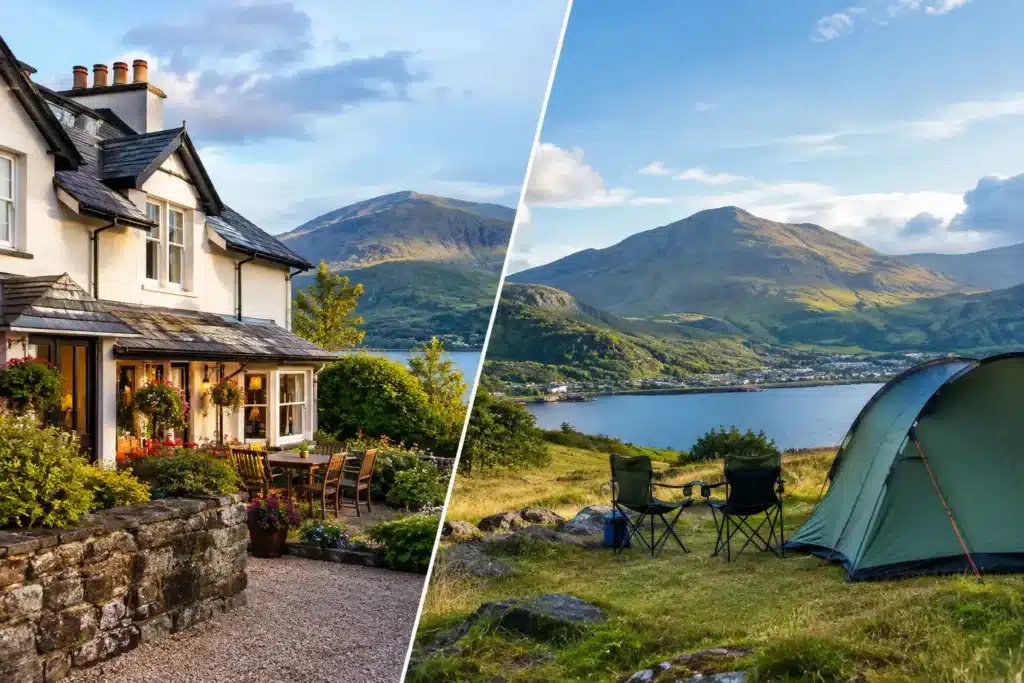
A B&B or campsite Fort William decision can shape far more than where you sleep. After a wet day on Ben Nevis, a long stretch of the West Highland Way, or a full day travelling through Glenfinnan and Lochaber, the difference between a warm room and a tent can feel significant. Neither choice is automatically better. It depends on your plans, your kit, the season and how much comfort you want at the end of the day.
Fort William is a practical base for ambitious Highland holidays. It attracts walkers, climbers, cyclists, rail travellers and families, often on tight itineraries. Choosing accommodation that fits the way you travel makes mornings easier and gives you more energy for the reason you came.
B&B or campsite in Fort William: start with your trip
Camping often suits visitors who want to spend as much time as possible outdoors, are carrying suitable equipment and are comfortable with a little unpredictability. A campsite can be a sociable, low-cost option, particularly in settled summer weather or when you are travelling in a campervan. Waking close to the hills has a clear appeal.
A bed and breakfast tends to suit travellers who need dependable rest and straightforward logistics. That may mean a walker arriving with soaked boots, a couple booking a short break around the Jacobite Steam Train, or a family wanting a proper base between days out. A private en-suite room, breakfast and somewhere to dry clothing can make a demanding itinerary much more manageable.
The best question is not simply, “Which is cheaper?” Ask what you need to be ready for the following day. If you are climbing, cycling or walking again, recovery has value. If your holiday is centred on outdoor living and you have time to adapt to conditions, camping may be exactly what you want.
Consider the Highland weather, not just the forecast
Fort William’s weather is part of its character, but it deserves practical respect. Even in summer, rain, wind and midges can change the feel of a camping trip quickly. A forecast may look promising at breakfast and turn damp by afternoon, especially in the mountains. In spring and autumn, nights can be cold, days are shorter and a dry place for kit becomes increasingly useful.
Camping remains enjoyable in changeable conditions when you have a good tent, warm sleeping system, waterproofs and a willingness to adjust plans. It is less appealing if you are travelling light, arriving by train, or have limited experience of pitching and packing in rain.
With a B&B, weather affects your day out rather than your entire overnight stay. You can return to a heated room, use drying facilities where available and start again after a proper night’s sleep. For visitors fitting a great deal into a few days, that certainty can be worth the additional spend.
Think honestly about the equipment you carry
Camping is not just accommodation – it is additional luggage and daily organisation. Tent, sleeping bag, mat, cooking kit, spare clothing and food all need carrying, storing and drying. For cyclists, that can mean extra weight on climbs. For West Highland Way walkers, it may mean choosing between carrying a full pack and arranging baggage transfer.
A B&B allows a lighter, simpler approach. You can arrive with walking boots, a daypack and the clothes you need, rather than a complete camp. Secure bicycle storage is particularly helpful for touring cyclists, while a drying room is useful when waterproof layers, boots and panniers need attention overnight.
This does not mean campers are poorly prepared. Many experienced hikers value self-sufficiency and already have lightweight, reliable equipment. But if your break is your first multi-day walk, or you are travelling with children, reducing the amount of kit can take pressure off the whole trip.
Comfort matters after a big day outside
A campsite gives you a simple place to stop, but the level of comfort depends on your equipment, the ground conditions and the facilities on site. You may be cooking outdoors, walking to shared washrooms and settling down to the sounds of other campers. For some people, that is a central part of a Highland holiday.
A guesthouse offers a more restorative end to the day. An en-suite room provides privacy, a hot shower and a proper bed. Daily housekeeping can be welcome on longer stays, and Wi-Fi, luggage storage and a guest lounge make practical tasks easier. A licensed resident bar also offers a relaxed place to enjoy a dram or chat about the day without heading back out into the weather.
For couples on a short break, comfort can leave more time and energy for sightseeing. For solo walkers, it can offer reassurance after a long day on the trail. For families, the ability to settle children into a warm room and begin the day with breakfast is often more valuable than the novelty of camping.
Breakfast and timing can change the day
When camping, breakfast is something you provide and prepare. That may be part of the pleasure, especially if you enjoy cooking outdoors. It also means allowing time to pack up, wash up and leave no trace before you start walking or driving.
At a B&B, a hearty Scottish breakfast gives you a reliable start without using your own supplies or stove fuel. This is especially useful before a day on Ben Nevis, a mountain-bike session at Nevis Range or an early drive to Glenfinnan. You can fuel up, check the weather and set out with less to organise.
Timing matters for transport too. Fort William is well placed for rail and bus connections, but timetables do not wait for a damp tent to be packed away. Guests travelling by train, joining a tour or collecting a bicycle may find the easier morning routine of indoor accommodation particularly helpful.
Location, parking and access to attractions
The right location depends on how you intend to move around. Campers may prefer a site with vehicle access or space for a motorhome, while walkers can prioritise proximity to their route. If you are driving, check parking arrangements before committing, particularly during busy summer periods.
For a central base, a B&B can make everyday travel simpler. Free parking, where provided, is useful for those touring by car, while EV charging can remove one more practical concern for electric-vehicle drivers. Being close to local amenities and transport links can also mean less driving after a long day on the road.
Fort William gives easy access to a broad range of experiences: Ben Nevis, the West Highland Way, Nevis Range, Glenfinnan Viaduct and the Jacobite Steam Train. If you plan to visit several of these in a short stay, a comfortable central base can help you make the most of your time rather than repeatedly setting up camp.
When a B&B is likely the better choice
Choose a B&B if you are arriving after a lengthy journey, carrying wet or technical gear, or tackling an activity that requires an early and well-rested start. It is also a strong option for mixed-weather trips, family holidays and visitors who want to combine outdoor days with scenic rail travel, restaurants and local sightseeing.
At Guisachan Guesthouse, en-suite single, twin, double and triple or family rooms are supported by breakfast, parking, a drying room, secure cycle storage and a welcoming guest lounge. Those details are designed for the realities of Highland travel, rather than simply providing a bed for the night.
When camping may be the right fit
Choose camping if being outside is a main part of the holiday, you are equipped for the conditions and your plans allow flexibility. It can be particularly rewarding on a dry summer trip, for campervan travellers, and for experienced hikers who enjoy managing their own camp routine.
Do book ahead where possible, bring weather-ready equipment and have a backup plan if conditions become unpleasant. Responsible camping also means following local guidance, using appropriate sites where required and leaving the landscape as you found it.
A good Fort William stay should support the trip you actually want to have. Whether that is a tent and a stove beneath a clearing sky, or a warm room, dry boots and breakfast before the next hill, choose the option that lets you enjoy the Highlands at your best.