
A soaked pair of walking boots, a late train into Fort William and an early start for Ben Nevis can quickly change what matters in a place to stay. The B&B versus self catering Highlands decision is not simply about whether you would like a kitchen. It is about how much time and energy you want to spend managing the practicalities of your trip.
For some visitors, having their own space and the option to cook is the right fit. For others, a warm room, a substantial breakfast and someone who understands the local area make a demanding Highland day far easier. The best choice depends on the sort of holiday you are taking, who is travelling with you and how independent you want your routine to be.
B&B versus self catering Highlands: the key difference
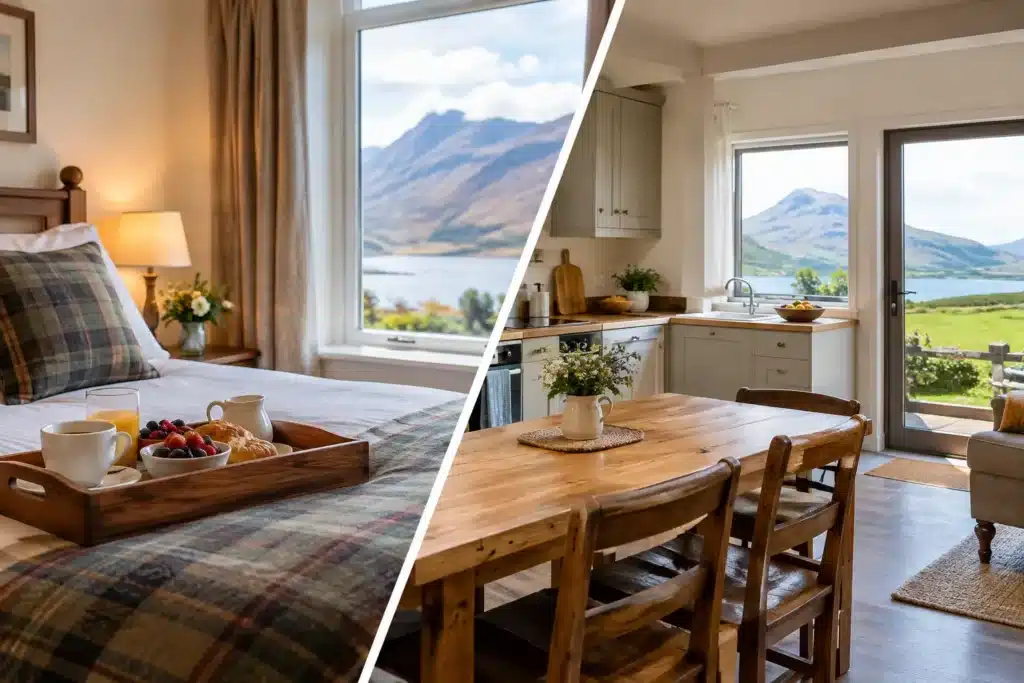
A bed and breakfast gives you a private room and the structure of a hosted stay. Breakfast is prepared for you, rooms are generally serviced daily, and there is usually a host on hand to help with straightforward local questions. You arrive, settle in and can focus on the reason you came – whether that is walking the West Highland Way, riding at Nevis Range or visiting Glenfinnan.
Self catering offers more independence. You normally have a whole cottage, flat or lodge, or at least a self-contained unit with cooking facilities. This can be particularly useful for longer stays, families with particular meal routines and travellers who enjoy preparing their own food.
Neither is automatically better. A self-catering property gives you more control over your day, but it also asks more of you. You will need to buy provisions, cook, wash up and make decisions about meals after a long day outdoors. A B&B is less private, but it removes many of those tasks and often provides a more straightforward overnight base.
When a B&B makes most sense
A B&B is often the practical choice for short breaks and active itineraries. If you are only in the Highlands for two or three nights, spending part of that time shopping and cooking may not feel like the best use of your holiday. Starting the day with a cooked Scottish breakfast can be especially welcome before a hill day, a cycle route or a long drive through the glens.
It is also a strong option for walkers and climbers. Outdoor clothing does not always dry in a car or a small bedroom, and muddy kit can make a self-catering stay feel cramped very quickly. A guesthouse with a drying room, secure bicycle storage and space to organise equipment takes some pressure out of travelling with wet boots, waterproofs and bags.
For solo travellers, the reassurance of a hosted property can matter too. There is a friendly welcome at the end of the day, help with baggage arrangements where available, and someone to ask about transport, local dining or the following day’s route. That does not mean you lose your independence. It simply means the accommodation is helping the trip run smoothly.
At Guisachan Guesthouse, this combination is designed around Fort William stays: comfortable en-suite rooms, breakfast, free parking, Wi-Fi and facilities that suit guests arriving with walking, cycling or mountain equipment. A guest lounge and resident whisky bar can also be a pleasant alternative to heading back out after a full day on the hills.
Breakfast can change the rhythm of a trip
The value of breakfast is easy to underestimate when booking. On a relaxed city break, finding a café may be part of the fun. Before a full day outdoors, it can be one more logistical task. A proper breakfast in the building gives you a reliable start, particularly when you need to catch a train, join a tour or set off before the weather turns.
It also helps with budgeting. Self catering can save money when you prepare several meals, but a well-provided breakfast reduces the amount you need to buy and carry. If you are travelling by train, motorbike or bicycle, that simplicity is worth considering.
Daily housekeeping is useful after wet weather
Highland weather can be glorious, but it can also be changeable. Returning to a room that has been tidied, with fresh towels and a warm place to rest, is a modest comfort that makes a real difference after a long, damp day. In most self-catering accommodation, you are responsible for keeping on top of cleaning during your stay and may need to bring or buy extra basics.
For a one-night stop, that is rarely a concern. For several days of walking or touring, the small services of a B&B can feel less like a luxury and more like sensible support.
When self catering is the better fit
Self catering comes into its own when space and flexibility are the priorities. A family staying for a week may appreciate a separate living area, the ability to make meals around children’s routines and room to spread out. Friends travelling together can share the cost of a larger property while enjoying communal evenings at home.
It can also suit visitors with specific dietary needs who prefer complete control over ingredients and cooking. If you are planning a slower holiday, perhaps using one property as a base for exploring different parts of the Highlands, a kitchen and dedicated sitting room can make the stay feel more settled.
The financial picture needs a realistic look. A cottage may offer good value for a group, especially over a week, but remember to include groceries, fuel for extra journeys to shops and any cleaning or service charges. For a couple staying two nights, a B&B with breakfast included can be comparable once those costs and effort are considered.
Think about arrival and departure times
Self-catering properties often operate around weekly changeover days or have fixed check-in arrangements. Some are outside towns, which can be peaceful but may require a car and careful planning for evening meals or supplies. This is ideal for guests who want seclusion.
A centrally located B&B is usually more convenient if you are using public transport, arriving on the Jacobite Steam Train route, or want easy access to local restaurants and facilities. It may also be simpler if your route changes due to weather, tired legs or a revised walking plan.
Questions worth asking before you book
The most useful question is not, “Which type of accommodation is best?” It is, “What will make this particular trip easier?” Be honest about how you travel. If you picture yourself happily cooking after ten miles on the West Highland Way, self catering may suit you well. If that sounds like a chore, breakfast and a hosted stay will probably be better value than they first appear.
Consider your transport, too. Drivers may value a self-catering cottage with space and privacy, while rail travellers often benefit from a central base without the need to carry food or make extra journeys. Cyclists should check for secure storage. EV drivers should confirm charging arrangements in advance rather than assume they will be available.
Finally, look beyond the bedroom or kitchen. Ask about parking, drying space, luggage storage, room configurations and access to local transport. A double room may suit a couple perfectly, while a twin or family room can make a short trip much more comfortable for friends or relatives travelling together.
Choose the stay that supports your holiday
The Highlands reward a little planning, particularly when your days involve early starts, changeable conditions and ambitious routes. Choose self catering when shared space, longer stays and full control over meals will genuinely improve your time away. Choose a B&B when you want a comfortable base, a dependable breakfast and practical help around the edges of the journey.
A good place to stay should leave you with more energy for the mountain, the loch, the railway journey or the road ahead. Book around the way you want to spend your day, not just the way you expect to sleep at night.