
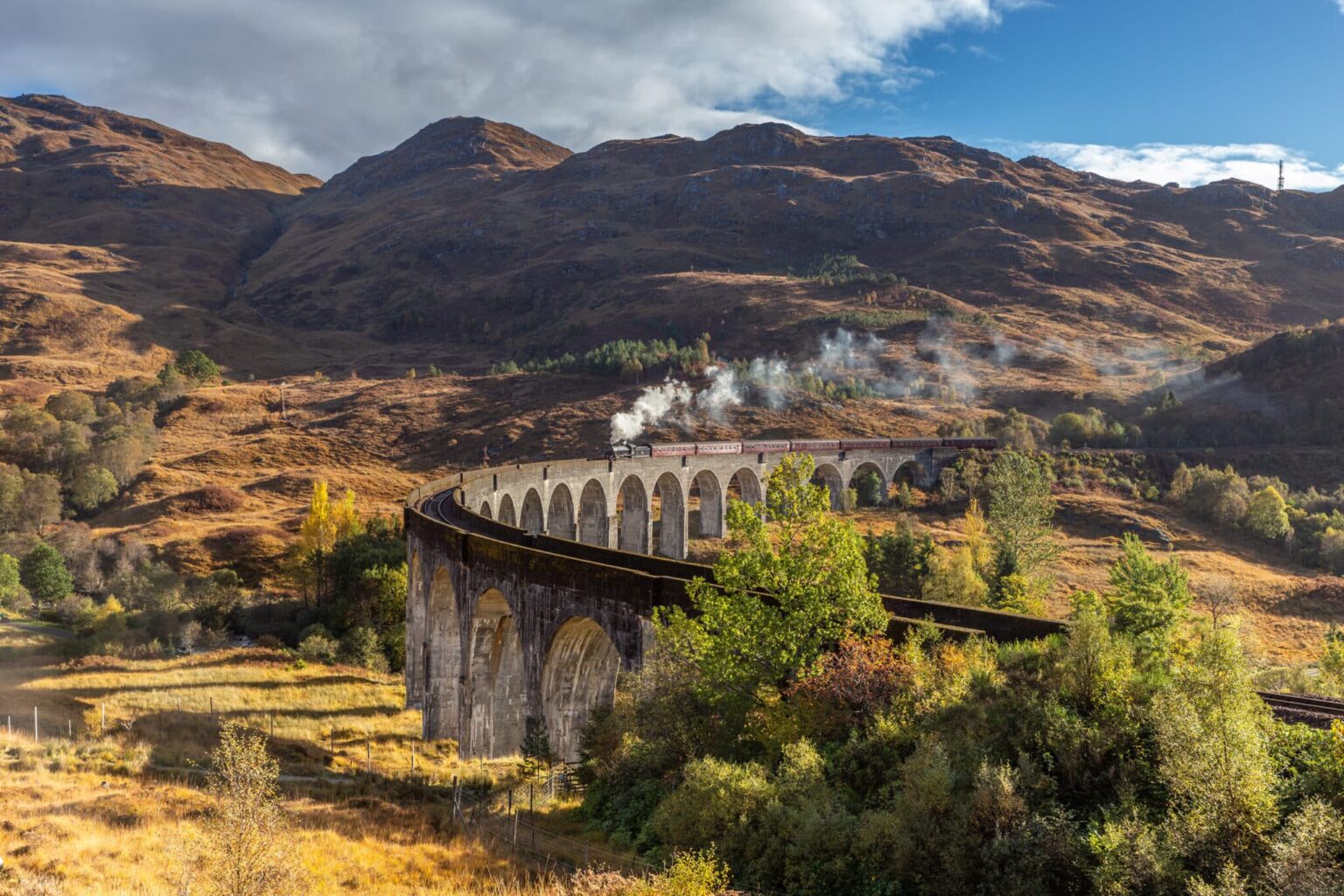
The best Glenfinnan photography viewpoints are close together, but they produce very different pictures. One looks straight along the curve of the viaduct, another puts the monument and Loch Shiel at centre stage, and a third rewards visitors prepared for a longer uphill walk. The key is choosing a viewpoint for the photograph you want, rather than simply following the busiest path.
From Fort William, Glenfinnan makes a straightforward half-day trip, although photographers often find that a full morning or afternoon gives them more breathing room for changing weather, train timings and a patient wait for the light. The road can be busy in the main season, so allow more time than the mileage suggests.
Best Glenfinnan Photography Viewpoints for the Viaduct
1. The main elevated viaduct viewpoint
The classic elevated viewpoint is the one most visitors have in mind: a broad view over the viaduct as it sweeps across the glen, with the surrounding hills behind it. It is reached on foot from the visitor facilities via a signed path that climbs gradually before becoming steeper and rougher underfoot.
This is the strongest all-round choice if you want the train, the full curve of the viaduct and enough landscape to show Glenfinnan’s scale. A standard zoom lens is usually more useful than an extreme telephoto here, as it allows room for the hillside and sky as well as the train. A wider lens can be particularly effective when cloud is breaking over the hills.
The compromise is company. At train times, this viewpoint can be very busy, especially in summer. Arrive early, choose your framing before the train is due, and be ready to take a few steps along the path if someone sets up directly in front of you. Please keep to the established path and avoid crossing fences or disturbing the hillside for a slightly different angle.
2. The lower path beneath the viaduct
For a more dramatic sense of height, continue towards the lower ground beneath and beside the viaduct. Looking up at the arches makes the structure feel far larger than it does from the main viewpoint, and this position works well when there is no train passing.
A portrait-oriented frame can emphasise the tall arches, while a person walking through the scene adds useful scale. In wet weather, this lower area can be muddy and slippery, so proper walking footwear is a better choice than trainers. The ground may be uneven even after a dry spell.
This is also a sensible alternative for visitors who arrive after the popular elevated viewpoint has become crowded. It does not give the famous sweeping train image, but it offers a more architectural photograph and often a quieter moment in the glen.
3. The farther hillside path for a wider landscape
Photographers with time and suitable boots can gain a more spacious view by continuing along the hillside paths beyond the most popular stopping point. The viaduct becomes one element within a larger Highland landscape, with Glenfinnan spread below and the slopes rising beyond.
This approach is especially worthwhile in changeable conditions. Low cloud can hide the highest peaks but leave shafts of light moving across the glen, creating a much more atmospheric image than a clear but flat midday sky. A small telephoto lens is useful from this distance to draw the viaduct and train closer to the surrounding hills.
There is a trade-off: the higher and farther you go, the less immediate the viaduct appears. If your priority is seeing every arch clearly, stay nearer the principal viewpoint. If you want a photograph that feels more like a Highland journey than a railway postcard, the extra walking can be worthwhile.
Views Beyond the Viaduct
4. Glenfinnan Monument and Loch Shiel
The area around Glenfinnan Monument gives a completely different set of compositions. Here, the focus is the long reach of Loch Shiel, the monument and the surrounding mountains, rather than the railway. The view is particularly strong when the water is calm enough to reflect the slopes, although a little wind can add texture and a sense of weather.
Walk around rather than taking the first obvious frame. From some positions, the monument stands cleanly against the loch; from others, the hills provide a darker background that helps it stand out. A medium focal length often gives a pleasing balance without making the monument look too small.
Early morning tends to be quieter, and softer light can bring out the texture of the stone and the changing tones on the loch. On a bright afternoon, consider photographing into side light rather than directly towards the sun, particularly if you want detail in both the monument and the surrounding landscape.
5. Lochside details near the visitor area
The lochside is easily overlooked by visitors concentrating on the viaduct, but it is a useful place to slow down between train times. Look for boats, reeds, changing reflections and the line of the hills receding into the distance. These quieter photographs help tell a fuller story of Glenfinnan, particularly if you are creating an album rather than chasing one landmark shot.
A polarising filter can reduce glare on the water, though it is not essential. More often, patience matters more than kit. Wait for a gap in the wind, a passing shower to clear, or a patch of light to reach one section of hillside.
6. Glenfinnan Station and the approach to the glen
Glenfinnan Station can provide characterful railway details, from platforms and signage to the sense of arrival in a remote Highland setting. It is not the place for the broad viaduct panorama, but it works well for close-up images that complement wider landscape photographs. Be respectful of passengers, railway operations and any areas that are not open to the public.
The road approach also offers fleeting views of the glen, but do not stop where it is unsafe or blocks passing traffic. Use recognised parking areas, then walk to your chosen viewpoint. A photograph is never worth creating a hazard on a narrow Highland road.
Timing a Steam Train Photograph
The famous steam-hauled service is a highlight for many visitors, but its timetable can change with the season, operational requirements and weather. Check the current timetable before setting out and build in time for parking, the walk to the viewpoint and finding a clear place to stand. Do not rely on an old social media post or a timetable from a previous year.
For the classic viaduct image, be in position well before the expected passage. Steam and sound can arrive before the locomotive reaches your frame, but trains move quickly through the scene. Set your exposure and focus in advance, then take a short sequence as it crosses rather than watching the whole moment through the screen.
If the train is delayed or does not run, Glenfinnan is still worth photographing. The viaduct itself, the monument and Loch Shiel remain excellent subjects, and a misty, train-free scene can be far more distinctive than a crowded standard shot.
Weather, Equipment and Good Manners
Glenfinnan weather changes rapidly. Bring a waterproof layer for yourself and a simple rain cover for your camera, even when the forecast looks kind. A microfibre cloth is handy for drying a lens after drizzle, while a spare battery is useful in cold conditions. Wind can be strong on exposed sections of the path, so a tripod is best kept low and weighted if you use one.
Mobile signal may be limited, paths can become slick, and daylight is short in winter. Tell someone where you are going if heading farther onto the hillside, and turn back if visibility worsens. For most visitors, the main viewpoints provide more than enough reward without pushing into difficult ground.
If you are staying in Fort William, an early breakfast and a dry pair of boots make a much more relaxed start to a Glenfinnan photography morning. At Guisachan Guesthouse, guests returning from a wet day can make use of the drying facilities before settling in for the evening.
Leave a little time after you have taken the familiar shot. The most memorable Glenfinnan photograph is often made when the crowd has moved on, rain is lifting from the loch, and the glen briefly becomes quiet again.