
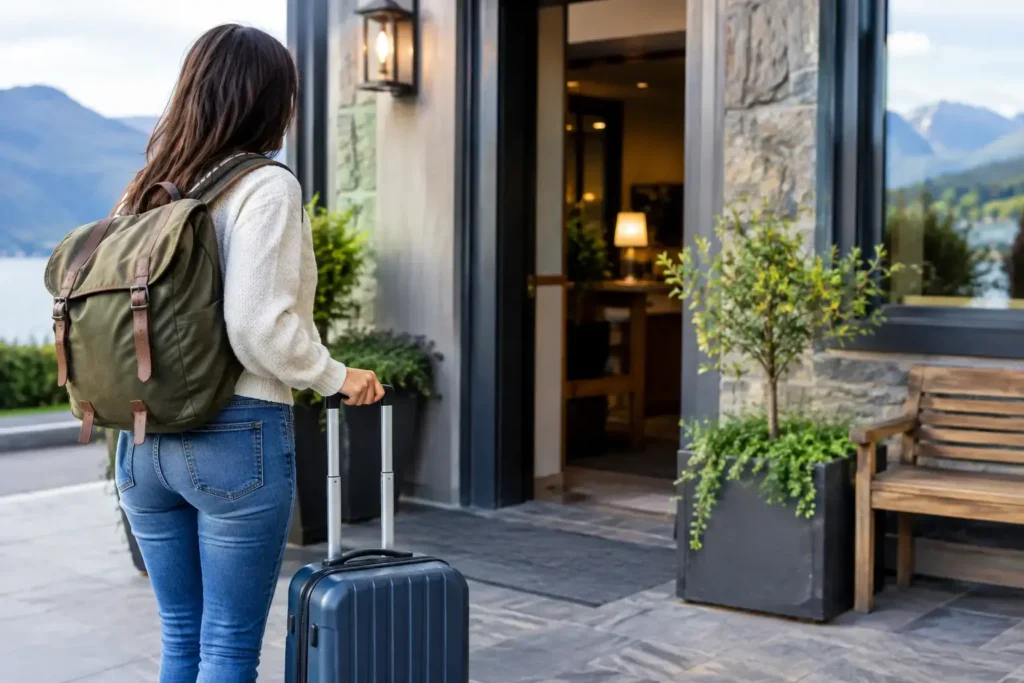
A rucksack on the platform after a long West Highland Way finish, or a suitcase beside you while waiting for an afternoon train, can put a dent in an otherwise good day. Fort William guesthouse luggage storage gives you a practical way to keep travelling after you have checked out, before your room is ready, or while you make the most of a gap in your plans.
For walkers, climbers, cyclists and sightseers, it is not simply a convenience. It can mean a relaxed breakfast, a final wander through town, or a short trip without carrying everything you brought to the Highlands. The key is knowing what to ask for, when to arrange it and what should stay with you.
When luggage storage makes a real difference
Fort William days rarely run to a neat hotel timetable. The Jacobite Steam Train, local buses and rail services have their own schedules, while the weather may encourage you to bring a walk forward or leave a mountain day for later. If you arrive ahead of check-in or have time between check-out and your onward journey, leaving your main bag at your accommodation can make those hours useful rather than tiring.
It is especially helpful at the end of the West Highland Way. Many walkers arrive with a well-used pack, damp layers and tired legs, then face transport connections later in the day or the following morning. A place for luggage lets you shower, change and enjoy Fort William without dragging kit from one café or viewpoint to the next.
The same applies to guests tackling Ben Nevis or spending a day at Nevis Range. You may only need a small daypack with water, layers, food and personal essentials. Your larger case, spare clothing and travel items are better left safely at the guesthouse than in a vehicle or carried unnecessarily.
What Fort William guesthouse luggage storage usually covers
Baggage storage generally means that guests can leave ordinary travel bags at the property for an agreed period around their stay. This may include suitcases, rucksacks and holdalls. At a family-run guesthouse, it is normally arranged directly with the hosts rather than through an automated locker system, which is useful if your plans change but does mean you should ask ahead.
Storage arrangements can vary according to the day, the number of bags, room turnover and how long you need them kept. A bag held for a few hours before check-in or after check-out is a straightforward request. Several bags for a group, oversized equipment, or storage across multiple days may need more planning and may not always be possible.
Do not assume that every item belongs in general baggage storage. Bikes, walking poles, skis, wet boots and outdoor equipment all need sensible handling. At Guisachan Guesthouse, guests also have access to secure bicycle storage and a drying room, which can be far more suitable for active-travel gear than leaving it with a suitcase.
Keep valuables and essentials with you
Even when bags are stored securely, keep your passport, wallet, medication, mobile phone, chargers, travel tickets and valuables in a smaller bag you carry yourself. This avoids a last-minute search if you need an ID document for a train, have to change a booking, or simply want your camera during a day out.
It is also worth separating the clothing and kit you need that day before handing over a larger bag. Highland weather can change quickly. Pack a waterproof layer, warm layer and any outdoor essentials in your daypack, even if the morning starts bright.
Be clear about wet or muddy gear
After a rainy walk, it is tempting to put everything into the nearest bag and forget about it. However, wet boots, muddy gaiters and damp waterproofs can affect other belongings and are not ideal for a shared storage area. Use a drying room where available, and ask the guesthouse team how they would prefer wet equipment to be handled.
This small bit of organisation also makes your onward journey more pleasant. There is a big difference between opening a bag on the train to find dry, orderly kit and finding that yesterday’s mountain socks have soaked through everything else.
Arrange storage before you arrive
The best time to ask about luggage storage is when you book, particularly if you know you will arrive early, depart late or carry substantial outdoor equipment. A short, clear message gives the guesthouse time to confirm what can be accommodated and advise on the most convenient drop-off or collection time.
Include your arrival and departure dates, approximate times, number of bags and any items that need separate storage. If you are travelling as a walking party or family, say so. Four rucksacks and a pram require different planning from one cabin case.
If your schedule is uncertain, explain that too. A delayed train, a changeable forecast or a long descent from Ben Nevis can all alter timing. Hosts cannot always hold bags indefinitely, but knowing your likely plans helps them offer a realistic arrangement.
Consider the handover points in your journey
Think through when you will actually need your luggage. If you are arriving by train and going straight out for lunch or a short local walk, you may be able to leave your bag before your room is ready. On departure day, you might check out after breakfast, store your case, then collect it just before your rail or coach connection.
For cyclists and road-trippers, the decision can be different. A car may seem like easy storage, but it is not always the best choice for valuables, electronics or luggage left out of sight for several hours. Guesthouse storage can offer more peace of mind, while free parking means you can still collect the vehicle when you are ready to leave.
Build a lighter day around your bags
Once your main luggage is looked after, Fort William becomes easier to enjoy at a sensible pace. You might browse local shops, take a gentle walk along the lochside, visit nearby attractions or settle in with a coffee before travelling onwards. If you have completed a demanding route, you may simply want time to sit down and recover rather than wrestle with a heavy pack.
For guests staying another night, storing luggage can also help with room changes or a day between activities. Perhaps you have a family room for part of a trip, then a smaller room after other members of your group head home. Or perhaps you are combining a climbing day with a rail journey and need only a few essentials to hand. The right arrangement depends on your itinerary, not a one-size-fits-all rule.
A guest lounge and a hearty Scottish breakfast can make these transition days more comfortable too. Instead of treating check-in and check-out as hard boundaries, you can plan around the parts of the Highlands you came to experience.
Questions worth asking your guesthouse
Before relying on baggage storage, confirm whether it is available on your dates and whether it is included with your stay. Ask about the earliest drop-off and latest collection time, whether bags can be held overnight, and how outdoor items should be stored. If you have a bicycle, large case or wet kit, mention it specifically rather than assuming it fits the usual arrangement.
It is also sensible to ask what happens if your transport is delayed. A good guesthouse will be clear about what it can do and where the limits are. Straightforward information is better than a promise that creates stress on departure day.
Luggage storage is a small detail, but it can protect the best hours of your trip. Arrange it early, keep the essentials with you and travel light enough to enjoy the last walk, the final view or a quiet moment before the journey home.