
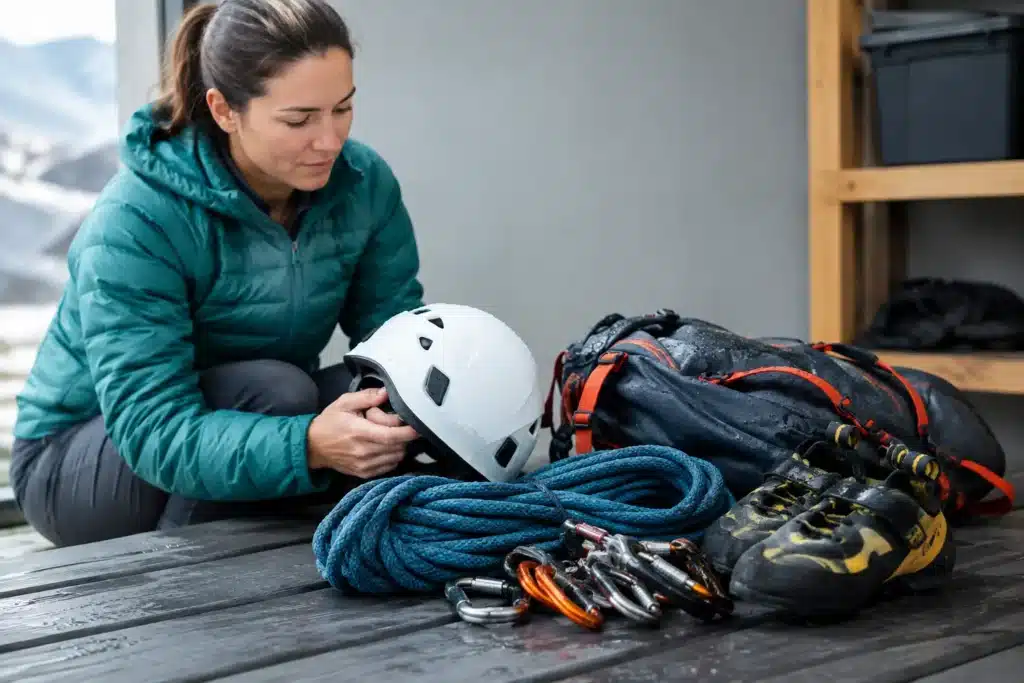
A wet rope shoved into the bottom of a rucksack, damp boots left beside a radiator, or a waterproof jacket packed away before breakfast can cause more trouble than most climbers expect. So, can climbers store wet equipment? Yes, but only as a short-term measure. The aim is to get kit out of sealed bags, allow air to circulate and dry it properly before the next outing or the journey home.
In the Highlands, where a clear forecast can still turn into rain, mist or a soaking descent, wet kit is often part of the day. A sensible drying routine protects expensive equipment, keeps accommodation more comfortable and means tomorrow’s plans do not begin with cold, clammy gear.
Can climbers store wet equipment overnight?
Overnight storage is usually fine when equipment is spread out in a well-ventilated drying area rather than left compressed in a bag. The difference matters. Moisture trapped against fabric, leather, webbing or metal can lead to unpleasant smells, mildew, corrosion and reduced performance over time.
For climbers staying one or two nights, the practical priority is not to make every item bone dry immediately. It is to remove the worst of the moisture and give the kit the best possible conditions to dry safely. Hang waterproof layers, open out packs, remove insoles from boots and separate ropes from muddy clothing. Even a few hours of airflow makes a real difference.
A drying room is particularly useful after a long day on Ben Nevis or a wet approach in Glen Nevis. At Guisachan Guesthouse, guests can make use of a drying room designed for the realities of Highland walking, climbing and cycling, rather than trying to drape everything around a bedroom.
What should never be left wet in a closed bag?
Some items tolerate a damp journey back better than others, but none benefits from being sealed up for long. Ropes, harnesses and slings should be unpacked as soon as possible. Muddy or salty moisture can work into fibres, while a rope stored wet and tightly coiled may develop mildew or retain moisture deep within its core.
Climbing shoes need attention too. They may survive a damp walk-in, but leaving them wet in a plastic bag can damage leather, encourage odour and make the next day’s climbing distinctly miserable. Loosen the closures, take out any removable footbeds and stuff them loosely with paper if they are very wet. Replace the paper once it becomes damp.
Boots are often the slowest item to dry. Avoid placing them directly on a hot radiator, in front of a fire or against a powerful heater. Fast, intense heat can dry leather unevenly, affect adhesives and cause cracking. Instead, remove the insoles, open the tongue wide and let them dry gradually in warm moving air.
Metal equipment deserves a quick check after wet conditions. Carabiners, belay devices, crampons and ice axes are generally durable, but they should be wiped down before storage, especially after coastal climbing or winter days where grit and moisture have built up. Check moving parts on carabiners and clean off visible mud. Surface marks can often be dealt with, but it is far easier to prevent corrosion than correct it later.
Drying ropes without damaging them
A climbing rope should be dried naturally, away from direct sunlight and strong heat. Ultraviolet light and high temperatures can both shorten the useful life of synthetic fibres, so a sunny windowsill, tumble dryer or radiator is not the answer.
If the rope is simply rain-wet, uncoil it loosely and arrange it so air can reach as much of it as possible. Turn or re-flake it occasionally if time allows. If it has been dragged through mud, rinse away grit with clean water first, following the manufacturer’s care guidance. Dirt can work into the sheath and add abrasion where climbers least want it.
Do not assume a rope that feels dry on the outside is dry throughout. Thick ropes can retain moisture internally, particularly after a full wet day. If you need to pack it for travel, use a breathable rope bag where possible and unpack it again at the first opportunity. A damp rope in a car boot for several days is not ideal, even if it has been rolled neatly.
How to handle wet waterproofs and clothing
Wet waterproofs should be hung, with pockets emptied and zips opened where practical. Mud can be brushed off once it has dried a little, but do not leave filthy garments bunched up. Apart from the smell, ground-in dirt can reduce the effectiveness of breathable fabrics.
Drying is not the same as cleaning. After several days on the hill, waterproof jackets and trousers may need a proper wash with an appropriate cleaner to restore breathability. Ordinary detergent and fabric conditioner can leave residues, so follow the garment label. Reproofing may also be needed when water stops beading on the outer surface.
Base layers, socks and gloves are easy to underestimate. A dry jacket does not help much if the gloves are still soaked through. Turn gloves inside out where suitable, separate pairs of socks and do not bury small items under heavier clothing. They dry more quickly when given their own space.
A practical routine after a wet climbing day
The simplest routine starts before entering your room. Shake off loose water and mud outdoors where possible, then carry the dampest kit separately from clean clothes and electronics. A dry bag is useful for the journey back, but it should be treated as temporary transport, not long-term storage.
Once inside, deal with boots and waterproofs first because they take the longest. Then uncoil or loosen the rope, hang the harness and slings, and wipe metalwork dry. Finally, empty the rucksack completely. Packs hold moisture in padding, pockets and seams, and a forgotten wet glove can leave the whole bag smelling musty by morning.
It can help to keep a small kit-care pouch containing a microfibre cloth, soft brush, spare newspaper or unprinted paper, and a few reusable mesh bags. This is not essential for every trip, but it makes a wet-weather routine quicker when you are tired and ready for a hot shower and supper.
When wet storage becomes a safety concern
Most damp equipment can be dried and used again without drama. However, inspect it more carefully if it has stayed wet for days, been exposed to salt water, developed mould, or feels stiff or unusually rough. Webbing with visible mildew, a rope with damage to its sheath, or corroded safety-critical hardware should not be ignored.
Winter equipment brings its own considerations. Crampons and ice axes should be dried thoroughly before being covered or packed away, as trapped moisture can cause rust. Check crampon points and bindings while cleaning them. A damp pair of gloves may be inconvenient; a corroded binding discovered at the start of an icy route is more serious.
There is also a comfort trade-off. Drying equipment in a sleeping area may seem convenient, but it can create condensation, clutter and damp carpets. Using a dedicated space is kinder to the room, your fellow travellers and your own gear.
Packing for the onward journey
If you must leave before everything is fully dry, pack thoughtfully. Keep wet equipment separate from clean clothing, maps, electronics and food. Use breathable bags for ropes and textiles where you can, and avoid tightly sealing damp boots in plastic for a long drive or rail journey.
When travelling home, unpack all remaining damp gear as soon as you arrive. It is tempting to leave the rucksack until the next day after a long journey, but this is when wet equipment is most likely to be forgotten. A few minutes of sorting protects kit that may have taken years to build up.
Wet weather is part of climbing in Scotland, not a reason to abandon a good day in the hills. Treat damp kit as something to manage promptly rather than hide away, and it will be ready for the next route, ridge or walk when the forecast gives you a window.