
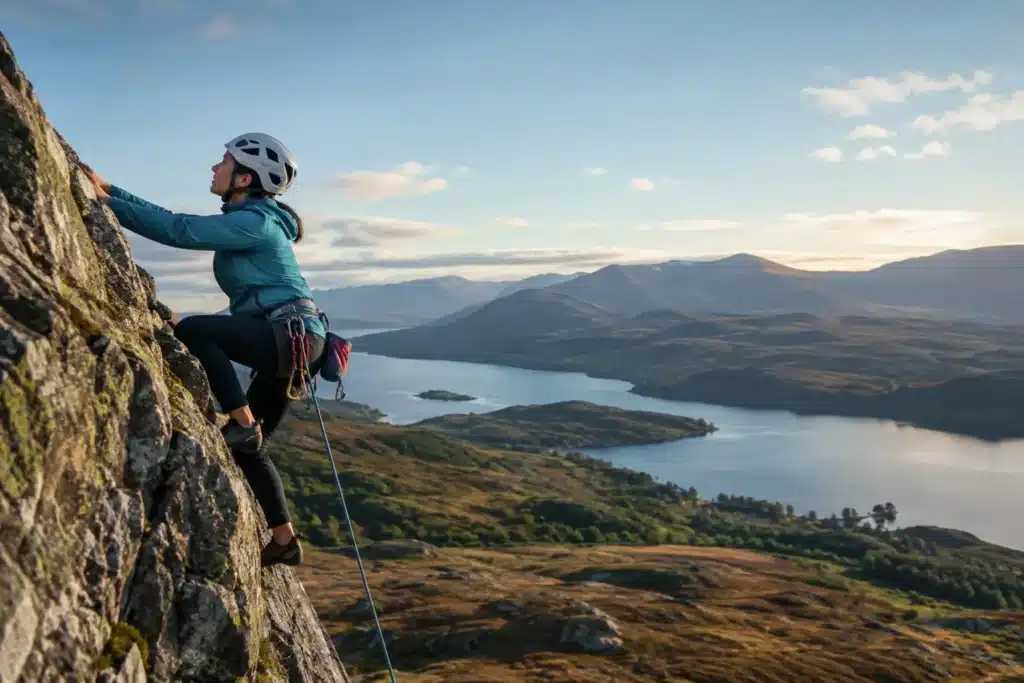
A good climbing weekend in Lochaber is not about squeezing the biggest possible route into every daylight hour. It is about arriving organised, choosing objectives that suit the forecast and your experience, and leaving enough time to recover properly. This climbing weekend itinerary example is designed for visitors using Fort William as a comfortable base, with options that can be adjusted when Highland weather has other ideas.
The outline assumes two full days, plus an arrival evening and a relaxed departure. It works best for competent climbers who are happy making their own route and safety decisions. Ben Nevis and the surrounding mountains can become serious very quickly, particularly in poor visibility, high wind, winter conditions or after heavy rain. Check the forecast, recent conditions and access information carefully, and have a lower-level alternative ready before setting out.
Friday: Arrive, prepare and keep the evening easy
Aim to arrive in Fort William with enough time to settle in before darkness. A climbing weekend feels considerably more relaxed when kit is sorted on Friday rather than pulled from bags at breakfast on Saturday. Check ropes, harnesses, helmets, waterproofs, food, water bottles and navigation equipment, then separate anything damp or muddy from what you need dry in the morning.
For guests travelling with heavy outdoor equipment, practical details make a difference. A drying room is useful after a wet approach, while secure storage keeps bikes and gear out of the car overnight. If you are driving, having parking at your accommodation also removes the need to hunt for a space after a long journey. At Guisachan Guesthouse, climbers can return to a warm room, use the drying facilities and enjoy a quiet drink from the resident whisky bar without needing to drive again.
Use the evening to make a realistic decision about Saturday’s objective. A bright forecast may suit a longer mountain day, but do not let a clear evening persuade you that conditions will remain settled. Look at wind strength as well as rain, consider the freezing level in colder months, and be honest about the ability of everyone in the group. If one person is new to mountain navigation, a complex high-level day in cloud is rarely the right choice.
Saturday: Make the main climbing day count
After a proper breakfast, set out early for your primary objective. The best choice depends on your climbing discipline, the season and the conditions underfoot. Fort William is well placed for cragging, scrambling, winter climbing and mountain days, but these are different activities with different commitments. Build your plan around the one you genuinely came to do, rather than trying to combine too much.
Option one: A Ben Nevis mountain day
For experienced, self-sufficient hillgoers and climbers, Ben Nevis offers a full and memorable day. The Mountain Track is the usual walking line, while more technical ground on the north face demands appropriate skills, equipment and a sound understanding of the route. Treat any ascent with respect: weather at the summit can be entirely different from conditions in town, and the plateau is not a place to rely on a mobile phone or vague recollection.
Start with clear turnaround times. On a summer day, that might mean agreeing to descend if you have not reached a particular point by early afternoon. In winter, shorter daylight, avalanche conditions and the need for crampons, ice axe and winter navigation ability make the margin much smaller. If conditions are not right, changing the plan is good mountain judgement, not a wasted day.
Option two: A lower-level climbing or scrambling plan
If the tops are windy or cloud-bound, choose an objective that keeps the day enjoyable without exposing the party to unnecessary risk. A shorter cragging session, a planned scrambling route within your competence, or a lower hill walk can still provide satisfying movement and outstanding Highland views. This is especially sensible for mixed-experience groups, anyone returning to climbing after a break, or visitors unfamiliar with Scottish rock and changeable weather.
The practical advantage of a lower-level day is that it leaves room to slow down. Take time to practise efficient ropework, build confidence on easier terrain, or finish early enough for a late lunch in Fort William. Good weekends are often remembered for relaxed decisions rather than an exhausted march back to the car in the rain.
Return, refuel and dry out
Plan for a late return, particularly after a mountain day. Keep a spare layer and dry footwear in the car if possible, along with a towel or plastic bag for wet kit. Once back at your base, hang up anything damp straight away. A drying room is most effective when gear is spread out rather than left in a tightly packed rucksack.
Your evening should be restorative rather than over-scheduled. Eat well, drink plenty of water and look after any small hot spots or blisters before they become a Sunday problem. A resident lounge or bar can be a welcome place to compare route notes, but it is worth keeping alcohol modest if you have another early start and a technical day ahead.
Sunday: Choose a shorter objective with a good finish
The second day of this climbing weekend itinerary example is deliberately more flexible. After Saturday’s effort, a shorter outing gives you time to enjoy the area while still allowing for a shower, packing and a safe journey home. The ideal Sunday plan has a straightforward approach, a clear escape option and no pressure to continue if legs or weather say otherwise.
If Saturday was a long Ben Nevis day, Sunday may be best spent climbing at a lower elevation, taking a gentler walk, or visiting Nevis Range for mountain views without another major ascent. If Saturday was a shorter cragging session, you may instead have the energy for a longer hill day, provided the forecast supports it. There is no fixed formula: the right itinerary follows conditions and the group in front of you.
Leave enough daylight for the less glamorous parts of the weekend. Clean obvious mud from boots, air the rope if it is damp, pack carefully and check that nothing has slipped behind a radiator or under a bed. If you have been travelling by train or need to store luggage after checking out, arrange this in advance rather than carrying climbing bags around town.
What to pack for a Highland climbing weekend
Most climbers bring their own technical equipment, but the Highlands reward a few extra practical items. A warm spare layer, waterproof jacket and trousers, hat, gloves, headtorch, map and compass belong in the pack even when the forecast looks favourable. Power banks can be helpful, but should never replace paper navigation and sound decision-making.
For the car or accommodation, bring dry socks, casual shoes, a bin bag or gear tote for wet clothing, basic blister care and something easy to eat after a long day. In colder months, check every member of the party has the correct winter equipment and knows how to use it. Hiring specialist kit may be possible locally, but it should not be your first encounter with crampons or an ice axe.
A weekend that leaves room for the Highlands
The strongest plan is one that has room to change. You may arrive hoping for a big summit day and find rain on the tops, or wake to a perfect blue morning after planning something modest. Keep one ambitious option, one sensible alternative and one easy fallback in mind.
That flexibility lets you enjoy Fort William for what it is: a practical base for serious mountain days, but also a place to rest, refuel and reset between them. Finish your weekend with dry kit, a good meal and enough energy for the journey home, and you will be far more likely to return for the route you wisely saved for another time.