
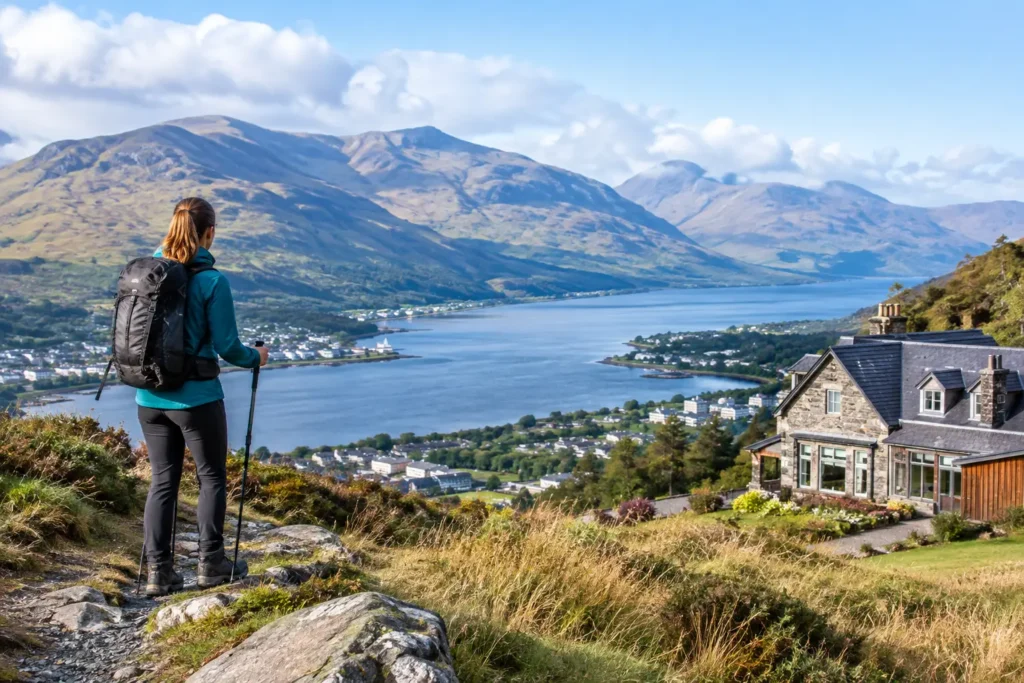
A long Highland day has a way of revealing what matters in a place to stay. After miles of rough path, a steep descent from the hills or a day walking in persistent rain, the priority is rarely a grand lobby. It is a hot shower, somewhere for wet boots and clothing to dry, a filling breakfast, and a bed that lets you start again properly the next morning. This Highland walking accommodation guide focuses on those details, helping you choose a base that supports the walk rather than adding another logistical job to the day.
What walkers should look for in Highland accommodation
The Highlands offer every kind of overnight stay, from remote bothies and hostels to hotels, holiday cottages and small guesthouses. The right choice depends on your route, how much kit you carry and whether you are travelling point to point or returning to the same base each night. For many walkers, a well-run bed and breakfast provides the useful middle ground: more personal and practical than a large hotel, but without the shopping, cooking and cleaning expected in self-catering accommodation.
Start with location, but look beyond the map. A central base near transport, shops and places to eat can make a real difference when plans change. Fort William is particularly useful for walkers arriving by train or bus, meeting luggage transfers, beginning or finishing the West Highland Way, or building in a rest day around Ben Nevis and Glen Nevis. It also gives non-walking companions plenty to do, from the Jacobite Steam Train and Glenfinnan to Nevis Range.
Then consider the end-of-day routine. A room may be comfortable, but can the property cope with muddy footwear, soaked waterproofs and a rucksack that needs sorting before an early start? These are not glamorous questions, but they are the ones that make a walking holiday easier.
Drying space is more than a nice extra
Highland weather can be bright, still and spectacular, then turn wet and windy with little warning. Even good waterproofs need airing, and boots rarely dry well when left in a bedroom overnight. Look for a proper drying room or a clear arrangement for wet outdoor kit. It keeps your room comfortable, protects other guests’ space and, crucially, means you are less likely to pull on damp socks the following morning.
Ask how the drying area works if you are staying during a busy walking period. A dedicated space with ventilation and room for boots, jackets and packs is usually far more useful than a radiator in the corner. If you are carrying delicate items, such as leather boots or technical clothing, dry them gradually rather than placing them directly against intense heat.
Breakfast should match your walking plans
A leisurely breakfast is a pleasure on a sightseeing break. Before a big day on the trail, it is fuel. Check the serving times, especially if you need to catch an early train, meet a taxi or set out before the popular paths become busy. A hearty cooked Scottish breakfast can see many walkers through the first demanding hours, while lighter options suit those who prefer to eat gradually on the hill.
It is sensible to carry your own daytime food, as café and shop opening times can be limited beyond the larger settlements. Still, starting with a proper breakfast means you are not relying on snack bars to make up the difference. Let your host know about dietary requirements in advance, rather than hoping there will be a suitable option on the morning.
Room choice affects recovery
There is no single best room for walkers. A solo traveller on the West Highland Way may value a quiet en-suite single and secure baggage storage. Couples often prefer a double or twin room with enough space to organise kit without living out of a bag. Families and small groups may find a triple or family room simpler than booking separately, particularly when travelling with children who are joining easier local walks.
An en-suite bathroom is worth considering after wet or strenuous days, when a shower is less of a luxury than a reset. Daily housekeeping can also be helpful on a multi-night stay, although you may prefer to keep equipment contained and off the floor. If you are arriving late after a delayed journey, confirm the check-in arrangements beforehand.
Choosing a base for different Highland walks
Your accommodation should fit the shape of your trip. A one-night stop at the end of a linear route has different needs from a five-night base used for day walks.
West Highland Way walkers
Fort William is the finishing point for the West Highland Way, so the final night often calls for straightforward comforts: a warm welcome, a shower, a satisfying meal plan and somewhere to celebrate finishing. Some walkers stay an extra night to avoid rushing straight onto onward travel. That can be a sensible choice if your feet need a rest or you want time to enjoy the town without a timetable.
Baggage storage is especially useful here. You may be waiting for a train, collecting a vehicle, or heading out for lunch before travelling on. If you have used a luggage-transfer service, check where and when bags can be received. Do not assume every property can accept deliveries outside staffed hours.
Ben Nevis and Glen Nevis
For Ben Nevis, proximity to the mountain matters, but it is not the only consideration. The Mountain Track is accessible from Glen Nevis, while a central Fort William base can offer easier access to shops, restaurants, rail and bus connections. The best option depends on whether you have a car, your intended start time and whether you are walking only Ben Nevis or combining it with other days out.
Build flexibility into your booking if you can. Ben Nevis is not a walk to force through poor conditions simply because it is on the itinerary. Low cloud, high winds and heavy rain can make navigation much harder, and snow can remain higher up well beyond winter. A dependable base gives you the option to switch plans to a lower-level walk, a scenic outing or a recovery day.
Cycling, climbing and mixed activity breaks
Walkers are not the only guests who arrive with wet, bulky equipment. If your holiday includes cycling at Nevis Range, climbing, paddling or touring, secure bicycle storage and a drying room become equally valuable. EV charging and free parking can also simplify a driving itinerary, while Wi-Fi is useful for checking forecasts, transport changes and route information.
For a mixed group, choose accommodation that does not make everyone follow the same schedule. One person may be heading for a summit while another prefers the Glenfinnan Viaduct, a rail journey or a gentler lochside walk. A central, comfortable guesthouse makes it easier to begin the day together and then split into separate plans without complicated travel.
Practical questions to ask before booking
Before confirming your stay, it is worth checking the details that affect your particular trip. Ask whether there is secure storage for bicycles, a drying facility for boots and waterproofs, and a place to leave luggage before check-in or after check-out. If you are driving, confirm parking arrangements and whether EV charging needs to be reserved.
Also ask about breakfast times, especially for an early mountain start, and whether the property can accommodate your room configuration. A twin may suit two friends better than a double, while a family room can make a short break easier to manage. If you expect to arrive tired and hungry, find out what is within walking distance and whether there is a resident bar for a quiet dram at the end of the day.
At Guisachan Guesthouse, these practicalities are part of the welcome: en-suite room choices, breakfast, parking, baggage storage, a drying room, secure bicycle storage and a guest lounge help take care of the details around an active Highland stay. The aim is not to turn a walking holiday into a tightly managed operation, but to make the essentials reliable.
Plan for comfort, not just convenience
Price and postcode are easy ways to compare accommodation, but they do not tell the whole story. A cheaper room further out may be ideal if you have a car and want quiet surroundings. Equally, a centrally placed stay can save money and time on taxis, parking, breakfast supplies and last-minute kit purchases. It depends on the route, the weather and how independent you want your evenings to be.
When you are planning your Highland walking break, picture the moment you return through the door. You will want a place that understands muddy boots, changing forecasts and the satisfaction of a full day outside. Choose the stay that gives you room to recover well, because tomorrow’s view is always better when you begin it warm, dry and properly fed.