
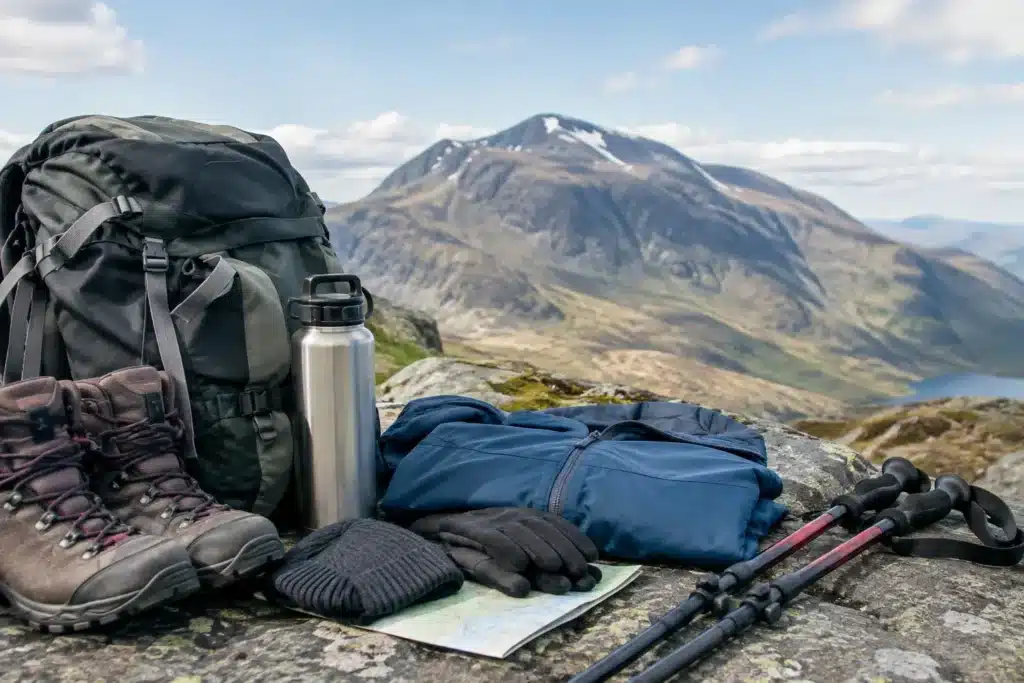
The summit may be only a short drive from Fort William, but packing for Ben Nevis climbs deserves the same care you would give a full mountain day anywhere in the Highlands. Conditions can change sharply between the town, the car park and the top. A clear, mild morning at sea level can become cold, wet and windy higher up, while cloud can reduce visibility quickly on the summit plateau.
The aim is not to fill every pocket with gear. It is to carry the clothing, food, water and safety items that suit your route, the forecast and the people in your group. A well-packed rucksack also makes the walk more enjoyable: you can find what you need, keep spare layers dry and avoid carrying unnecessary weight.
Start with the route, not the rucksack
Most first-time visitors use the Mountain Track, sometimes still called the Tourist Track. It is a substantial hill walk rather than a gentle stroll, usually taking several hours up and down over a long, rocky ascent. Even on this route, the upper mountain is exposed and navigation can become difficult in poor visibility.
The Carn Mor Dearg Arete is a different undertaking. It is longer, more committing and includes exposed ground. Anyone taking that route should have suitable mountain experience, confidence with scrambling terrain and kit appropriate to the conditions. Winter ascents are another category again, often requiring winter skills, ice axe and crampons, plus the judgement to turn back when conditions are unsuitable.
Your packing list should therefore follow the plan. Check a detailed mountain forecast before setting out, not just the weather for Fort William. Look at wind speed, temperature, freezing level, cloud base and rainfall, then reconsider your route and start time if the forecast is deteriorating.
Clothing for Ben Nevis: layers that work when wet
Highland weather is often changeable rather than simply rainy. You may begin walking in a T-shirt, put on a fleece during a rest, then need a waterproof shell as wind and rain arrive. Layering gives you the flexibility to manage that change without stopping for long periods feeling cold.
Wear a wicking base layer and choose walking trousers or leggings that allow easy movement. Pack a warm insulating layer, such as a fleece or lightweight synthetic jacket, plus a properly waterproof jacket and waterproof overtrousers. Waterproofs are not merely for an unpleasant shower. They are protection from wind chill, particularly when you slow down near the summit.
Avoid relying on cotton clothing. Once wet, it stays wet and loses warmth. A spare dry base layer in a waterproof bag can make a real difference if the day becomes wetter than expected.
A warm hat and gloves belong in the rucksack in every season. They may feel unnecessary at the start, but the summit is frequently much colder than Fort William. Take a spare pair of gloves if rain is likely. In summer, add sun cream and sunglasses too: strong sun and reflective rock can catch people out, even in Scotland.
Footwear and socks
Sturdy walking boots with good grip are the sensible choice for most Ben Nevis ascents. The Mountain Track is rocky and can be slippery after rain, while wet ground around the lower slopes and water crossings can leave trail shoes soaked early in the day. Make sure boots are already worn in rather than brand new for the climb.
Wear comfortable walking socks and take a spare pair in a dry bag. Blisters are easier to prevent than manage halfway up the mountain, so use the socks, insoles and lacing method you know work for you. Gaiters can be worthwhile in sustained rain or when snow remains on higher ground, but they are optional for a dry summer day.
What to pack in your day rucksack
A 20 to 30-litre day pack is usually enough for the Mountain Track if it fits well and has space for waterproofs, insulation, food and water. Place the items you may need suddenly – jacket, map, gloves and snacks – near the top. Keep spare clothing, mobile phone and any paper items inside dry bags or simple waterproof liners.
Bring a paper map and compass, and know how to use them. A mobile phone is useful for photographs, forecasts and navigation, but batteries drain faster in cold weather and signal is not guaranteed. Carry a charged power bank if you are relying on a navigation app, but do not let the app replace basic map skills.
The following items are sensible for a normal three-season ascent:
- Waterproof jacket and trousers, a warm layer, hat and gloves
- Map, compass, charged mobile phone and a small power bank
- Headtorch, even when you expect to finish in daylight
- First-aid kit, blister plasters, personal medication and an emergency foil bag or bivvy bag
- Water, high-energy food and a few extra snacks kept for an unexpected delay
- Whistle, sun protection and a small rubbish bag
A headtorch is particularly easy to overlook in summer. Delays happen: a slower member of the group, a wrong turn, low cloud or a longer-than-expected descent can all turn an afternoon finish into a late one.
Food and water for a long mountain day
Take more food than you expect to eat. Sandwiches, oat bars, flapjacks, dried fruit, nuts and chocolate all travel well, but choose food you will genuinely want when tired and cold. Small snacks every hour or so are often more helpful than waiting until energy has dropped.
Water needs vary with temperature, pace and individual preference. Many walkers carry at least one to two litres, with more on a warm day. Streams may look inviting, but do not depend on untreated water as your sole supply. A filter or treatment method can provide a useful backup, provided you understand how to use it.
Begin the day properly fed and do not underestimate the value of a meal after the descent. A hearty breakfast before an early start can take the strain out of the first few hours, especially for visitors still adjusting to long Highland days.
Keep dry gear dry and leave no trace
The weather does not have to be dramatic for damp kit to become uncomfortable. Line the inside of your pack, separate wet waterproofs from dry insulation where possible, and pack a dry change of clothes for the car or your accommodation. That small bit of organisation is welcome after hours on wet stone.
Ben Nevis is a busy mountain, and thoughtful habits protect it for everyone. Take all litter home, including food wrappers and tissues. Use toilets before setting out where available, and follow responsible outdoor access guidance if nature calls on the hill. Keep dogs under proper control around livestock and wildlife, and give other walkers room on narrow or steep sections.
A sensible base before and after the climb
An early start is easier when your kit is laid out the night before. Check that your boots are dry, fill water bottles, charge your mobile phone and headtorch, and keep breakfast plans simple. If you are staying in Fort William, being close to the mountain also gives you more flexibility to wait for a break in the weather rather than committing to a rushed start.
For guests returning with wet jackets, boots and muddy clothing, a drying room is far more useful than trying to air everything around a bedroom. At Guisachan Guesthouse, secure facilities, parking and a filling breakfast are arranged with active Highland days in mind, whether Ben Nevis is the main event or part of a wider walking holiday.
When to turn around
The strongest decision on Ben Nevis is sometimes to stop before the summit. Turn back if wind, rain, cloud, ice, fatigue or a group member’s confidence makes the day less safe than planned. There will be another opportunity, and the lower slopes still offer a memorable day in remarkable scenery.
Pack with enough margin for the conditions to worsen, tell someone your intended route and expected return time, and allow time for a careful descent. A dry layer, a working torch and an extra snack can feel like small things at the car park. On the mountain, they give you welcome options.