
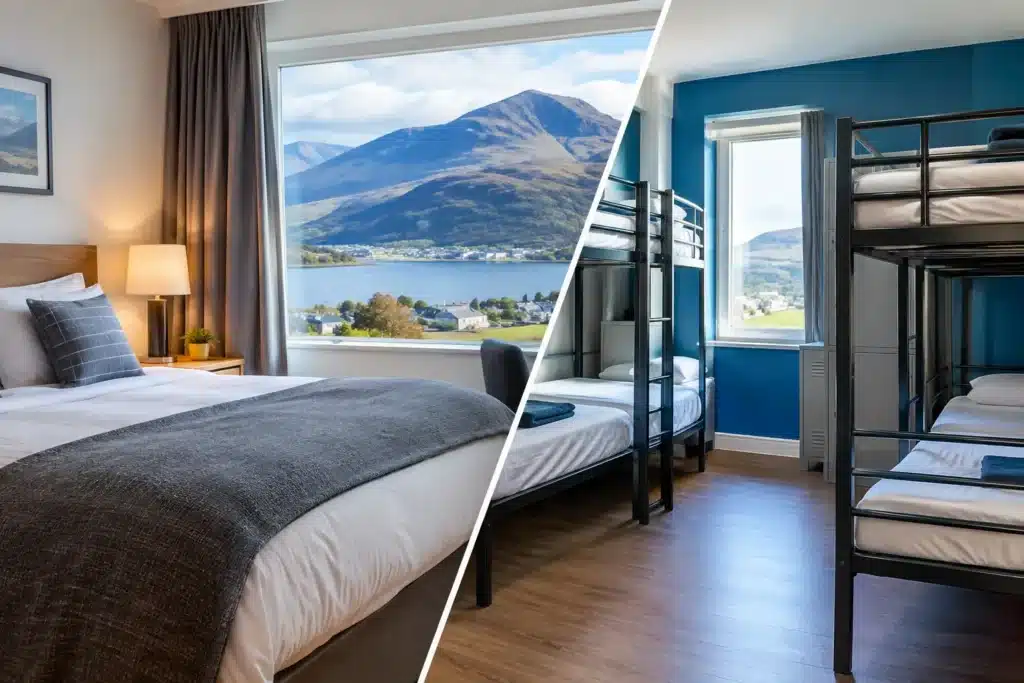
A wet jacket, muddy boots and an early start up Ben Nevis can make the choice between private rooms versus hostels feel less like a budget decision and more like part of the trip itself. Both can be excellent bases in Fort William, but they suit different travel styles, group sizes and expectations of rest. The best option is the one that leaves you properly prepared for the following day, whether that means meeting fellow walkers over a shared table or closing the door on a quiet room and getting an early night.
For many Highland visitors, the real comparison is not simply price. It is about sleep after a long day on the West Highland Way, somewhere to dry outdoor kit, a dependable breakfast before an early train, and enough space to organise the next stage of the journey. Here is what to consider before booking.
Private rooms versus hostels: the main difference
A hostel is usually designed around sociable, lower-cost travel. Guests may book a bed in a shared dormitory, use shared bathrooms and prepare food in a communal kitchen. Some hostels also offer private rooms, so it is worth checking the room and bathroom arrangement rather than relying on the label alone.
A private room in a guesthouse or bed and breakfast generally provides your own sleeping space, often with an en-suite shower room. Breakfast may be included, and the stay tends to feel quieter and more structured. There may still be shared areas such as a lounge or bar, but you can choose when to socialise rather than sharing your sleeping space with other travellers.
Neither format is automatically better. A solo traveller looking to keep costs down and swap route advice may genuinely prefer a hostel. A couple, family, tired walker or guest travelling with cycling equipment may find that privacy and practical facilities are worth the additional cost.
Sleep and privacy after an active day
Sleep is one of the biggest dividing lines. Dormitory accommodation can be lively and friendly, but it also brings the realities of several people waking at different times, packing rucksacks, returning from the pub or setting alarms for an early departure. Earplugs and an eye mask help, though they cannot guarantee a quiet night.
A private room gives you control over your evening. You can shower, spread out maps, charge devices, call home and turn in when you are ready. This matters particularly for walkers tackling consecutive stages, climbers watching the weather, or cyclists who need a good recovery night before another day in the saddle.
En-suite facilities add another practical benefit. After a rainy day, having your own bathroom avoids queues and means you do not need to carry toiletries along a corridor. For couples and families, it also removes a common source of morning delay. If you have a very early train, a guided climb or a ferry connection, those small minutes can be useful.
Privacy does not mean isolation. A well-run guesthouse still offers a welcome, local conversation and the chance to ask sensible questions about routes, transport or places to eat. The difference is that the social side happens on your terms.
Cost: look beyond the nightly rate
Hostels often win on the headline price, especially for a single bed in a dormitory. For a solo traveller on a tight budget, that saving can make a longer Highland trip possible. Shared kitchens can also reduce food costs, particularly if you are happy to shop and cook after a full day outside.
However, the comparison changes when two or three people are travelling together. A twin, double or family room can offer better value than paying separately for multiple dormitory beds, particularly when breakfast and parking are included. It is worth pricing the whole stay rather than comparing the first figure shown on a booking page.
Think about the extras you would otherwise buy. A cooked breakfast can save both money and time before a long walk. Free parking matters if you have arrived by car. Secure bicycle storage, luggage storage and a drying room can avoid awkward arrangements or the risk of bringing wet, valuable equipment into a bedroom. These details are not glamorous, but they are often what make an active break run smoothly.
Breakfast, food and the morning routine
A hostel kitchen suits travellers who enjoy independence. You can eat at the time you choose, make a packed lunch and cater for your own preferences. It is a good arrangement if you are staying for several nights or want the flexibility to prepare your usual meals.
The trade-off is shopping, cooking and washing up when you may already be tired. Kitchen space can also be busy at the same time everyone is trying to make porridge, fill flasks and leave before the weather changes.
At a guesthouse, breakfast provides a simpler start. A hearty Scottish breakfast is particularly welcome before a demanding day in the hills, while lighter choices can suit guests setting off on a scenic rail journey or a day of sightseeing. You can eat, collect your kit and get moving without finding a supermarket or cleaning a pan first.
For guests staying at Guisachan Guesthouse, a resident whisky bar and guest lounge offer an easy way to wind down afterwards. That can be a quieter alternative to heading back out when your legs have already done enough for one day.
Facilities for wet weather, bikes and boots
The Highlands are not a place to plan around perfect weather. Even a bright forecast can become a wet afternoon, and kit has a habit of arriving back muddier than expected. Before booking any accommodation, ask how it handles outdoor equipment.
A drying room is especially useful for walkers and climbers. It gives wet boots, waterproofs and packs a chance to dry properly, rather than leaving them in a cramped bedroom and hoping for the best. Secure bicycle storage is equally valuable for touring cyclists and riders visiting Nevis Range, while EV charging and parking can simplify arrival for those travelling by car.
Hostels vary considerably. Some are extremely well equipped for outdoor guests, with drying areas, lockers and bike storage. Others are more basic, so do not assume that every hostel has space for a muddy bike or several days’ worth of walking gear. Likewise, not every private room comes with outdoor-focused facilities. Check the practical detail, not only the photographs.
Who is each option best for?
Hostels are often a strong choice for independent solo travellers, backpackers and friends who enjoy a sociable atmosphere. If meeting other people is part of the holiday, a shared kitchen and common room can be a real advantage. They can also work well for one-night stops when price matters more than privacy.
Private rooms tend to suit couples, families, business guests and anyone who needs reliable rest. They are also a sensible choice after a demanding stage of the West Highland Way or before a major mountain day. A single room can give solo visitors privacy without paying for unused beds, while twin, double and triple rooms can make planning straightforward for small groups.
There are grey areas. A confident solo walker may choose a private room for recovery after several nights in dormitories. A couple may choose a hostel private room for its communal atmosphere. What matters is matching the accommodation to this particular part of your trip, rather than following a rule for the whole holiday.
Location and getting around Fort William
Where you stay can affect the day more than the type of room. A central base is useful if you are arriving by train, joining the Jacobite Steam Train, picking up supplies, eating out or using local buses. It can also make an early departure less stressful when you are heading to Glenfinnan, Nevis Range or a trail start.
If you are driving, check parking before you book, especially in busy periods. If you are carrying bikes, walking poles or larger bags, consider the route from the car park or station to your room. For guests completing a linear walk, baggage storage can be as useful as a comfortable bed, allowing you to travel lighter between stops.
A practical way to choose
Before deciding, consider four questions: how much sleep do you need, how much kit are you carrying, whether breakfast and parking are included, and whether you want to meet people or have quiet time. Then check the specific room type, bathroom arrangement and outdoor facilities. A hostel with a private en-suite room may be a good middle ground, while a family-run guesthouse may be the more restful choice after a long day outside.
Choose the place that supports the journey you have planned. In the Highlands, a warm shower, dry boots and a proper night’s sleep can be every bit as valuable as the view from the summit.