
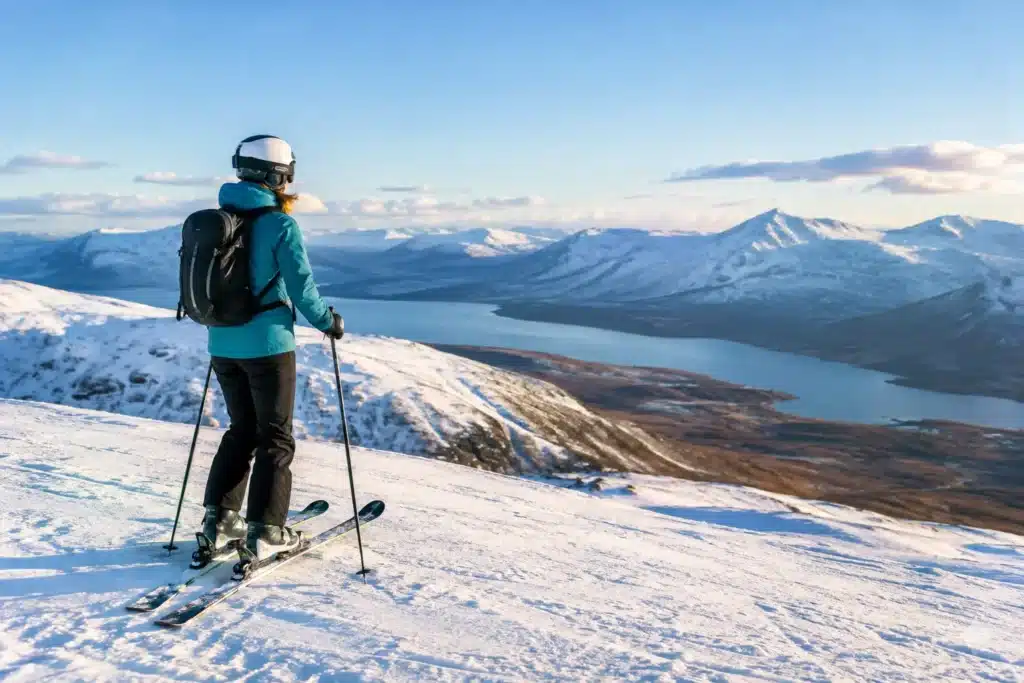
A clear morning at Nevis Range can make the Highlands feel close enough to touch: Lochaber spread below, high ridges catching the light and a full day of mountain activity ahead. But when to visit Nevis Range depends less on finding one perfect month and more on deciding what you want from the day. Snow sports, gondola sightseeing, mountain biking, walking and family time all have slightly different sweet spots – and Highland weather always has the final say.
For most visitors, late spring to early autumn offers the widest choice of activities and the most forgiving conditions. Winter is the time for skiing and snowboarding, though it demands a little more flexibility. Whatever the season, build in a weather-aware plan and avoid making a single ride, trail or mountain day the only fixed point of your Highland break.
When to visit Nevis Range by season
Winter: best for snow sports and big mountain conditions
Winter is the reason many keen skiers and snowboarders come to Nevis Range. The snowsports season often runs from around December into April, but exact opening dates, snow cover and which lifts operate can change quickly. A cold, settled spell may bring excellent skiing well into spring; mild temperatures, rain or high winds can affect conditions at any point.
January and February are often the coldest months, with the best chance of proper winter cover high on the mountain. They suit visitors who are happy to prioritise skiing, boarding or simply seeing the mountain in winter dress. Daylight is short, roads can be affected by ice or snow, and it is wise to allow extra time for driving.
March and early April can be an especially rewarding compromise. There is more daylight, the sun can feel surprisingly warm at lower levels, and snow may still be good on the upper slopes. Families and first-time skiers often appreciate the longer days, although school holiday periods can be busier.
Winter visitors should come prepared for changing plans. Strong winds can affect lift operations, and a snowy forecast in Fort William does not tell you exactly what is happening further up the mountain. Check the latest conditions before setting off, carry suitable clothing, and have a lower-level alternative in mind for any weather day.
Spring: best for longer days and quieter mountain time
From April into May, Nevis Range begins to appeal to a wider mix of walkers, sightseers and cyclists. Snow can linger high up, while the glens turn green and the days become noticeably longer. It is a fine time for visitors who enjoy mountain scenery but do not need every summer trail or facility to be at its busiest.
Spring weather can be wonderfully crisp and clear, particularly after a cold front, but it is not reliably warm. You may have sunshine, wind, showers and low cloud in the space of one day. Waterproof layers and sturdy footwear remain essential, even if the forecast looks kind over breakfast.
May is often a particularly pleasant month for a Highland holiday. The landscape is fresh, daylight lasts well into the evening and the busiest summer weeks have not yet arrived. Midges are usually less troublesome than later in the season, although no month is a guarantee.
Summer: best for sightseeing, walking and family days out
June, July and August are the most straightforward months for visitors planning a gondola trip, walking, biking or a relaxed mountain day with the family. Services are generally geared towards summer visitors, the long daylight hours leave room for a gentler pace, and Nevis Range can fit easily alongside a trip on the Jacobite Steam Train, a walk in Glen Nevis or time around Fort William.
This is also the busiest period. Weekends, school holidays and spells of settled weather can bring more people to the car park, gondola and popular trails. Book accommodation early if you are travelling at peak times, especially if you need parking, a family room or somewhere practical to dry outdoor kit after a wet day.
Summer does not mean guaranteed clear views. Cloud often gathers around Aonach Mor, and the summit area can feel far colder than the town. If panoramic views are your main aim, give yourself more than one possible day and choose the clearest forecast rather than assuming the day you arrive will be the best one.
For mountain bikers, summer brings the fullest atmosphere around the trails, but conditions still matter. Rain changes surfaces, wind can affect uplift operations, and popular riding days can feel busy. Early starts are useful if you want more time on the hill and a quieter start to the day.
Autumn: best for colour, calmer trails and flexible trips
September and October are excellent for visitors who prefer cooler air, autumn colour and a little more space. The hills and forests around Lochaber can look their best in September, while the light becomes softer and the evenings draw in. Walking, sightseeing and biking can all be very enjoyable when conditions are settled.
The trade-off is that daylight shortens quickly and the weather becomes more changeable later in the season. A dry, bright October day can be memorable, but prolonged rain and high winds are also more likely than in high summer. Bring a torch if you are planning a longer walk, and do not rely on summer opening patterns continuing unchanged into late autumn.
Autumn can suit couples, photographers and walkers who value atmosphere over guaranteed sunshine. It is also a good choice for travellers building a broader Highland itinerary, with Nevis Range as one well-timed part of the trip rather than the whole focus.
Choosing the right time for your plans
If skiing or snowboarding is the priority, choose winter or early spring and keep your dates flexible where possible. A short break with several potential mountain days is safer than arriving for one fixed day and hoping for perfect snow and calm winds.
If your main aim is the gondola and mountain views, late spring through early autumn gives the best overall chance of a comfortable visit. Even then, visibility matters more than the calendar. A bright April weekday can offer better views than a wet Saturday in August.
Walkers should think carefully about route choice. The gondola can provide access to higher ground, but high-level paths are not casual strolls. Conditions can be cold, wet and misty even in summer, and navigation skills, proper footwear and appropriate layers are needed. For a lower-level day, the wider Fort William area offers plenty of rewarding alternatives when cloud is sitting on the mountain.
Families with younger children often find summer the simplest option, thanks to longer days and a broader choice of nearby activities. Spring and early autumn can be equally enjoyable for older children who are comfortable outdoors and do not mind dressing for variable weather.
Weather matters more than the month
The most useful habit when planning Nevis Range is to check the mountain forecast, not only the forecast for Fort William. Wind speed, cloud base, temperature and precipitation can all influence how the day feels and what is operating. Conditions at the top can be dramatically different from those in town.
Pack a waterproof jacket and trousers, warm mid-layers, gloves and a hat even in summer if you are heading uphill. Sunglasses and sun cream are worthwhile too: bright Highland days can be strong, especially when light reflects from snow. A small rucksack with water, snacks and a spare layer makes a short visit much more comfortable.
It also pays to begin early. You gain more time if the weather changes, have a better chance of parking easily during busy periods, and can adjust the rest of your day without rushing. If the mountain is clouded in, consider saving the gondola for another day and enjoying one of the area’s lower-level attractions instead.
Staying nearby makes weather changes easier
A Fort William base is particularly helpful when your plans depend on mountain conditions. You can look at the morning forecast, have a proper breakfast, and decide whether the day is right for Nevis Range or better suited to sightseeing, a gentler walk or a rest day. For walkers, cyclists and skiers, somewhere with drying space, secure storage and parking also removes some of the practical strain from a wet or muddy day.
At Guisachan Guesthouse, guests often appreciate being able to return to warm, comfortable rooms after time on the hill, with a drying room for outdoor kit and a hearty Scottish breakfast before the next start. Those small details matter when the weather has asked more of you than expected.
The best time to visit Nevis Range is therefore the time that matches your plans, with enough room in the itinerary to respect the mountain. Bring the right layers, check conditions close to the day, and let a clear Highland morning decide the moment you head uphill.