
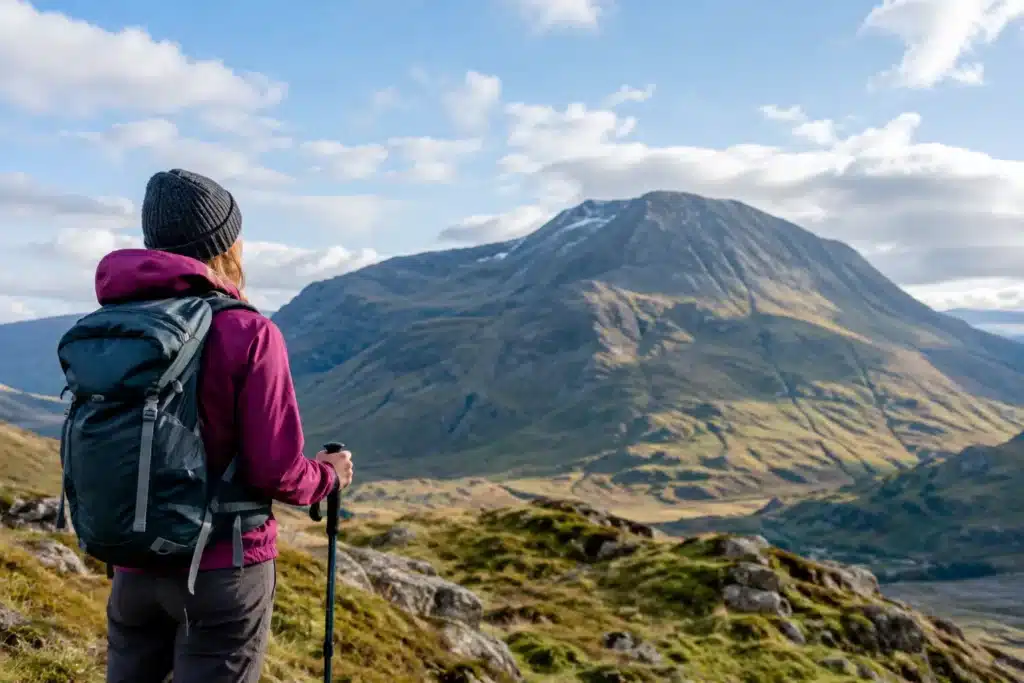
Ben Nevis can feel like a completely different mountain from Fort William. A bright, mild morning at sea level may become low cloud, driving rain and near-freezing wind on the summit plateau within a few hours. This guide to Ben Nevis weather is designed to help walkers, climbers and first-time visitors make sensible plans, pack for the conditions and recognise when a change of plan is the right call.
Why Ben Nevis weather needs respect
At 1,345 metres, Ben Nevis is the highest mountain in the UK, and it creates its own challenges even on the popular Mountain Track. The height matters, but so does its exposed location on the west coast of the Highlands. Atlantic weather systems can bring rain, cloud and strong winds quickly, while the summit is frequently hidden from view.
Temperatures generally fall as you climb. As a useful rule of thumb, the summit may be around 8°C colder than Fort William before wind chill is considered. Add a strong wind, wet clothing and a slow descent, and a day that started comfortably can become unpleasant or dangerous.
The key point is that a town forecast is not a mountain forecast. Checking only the weather for Fort William can leave you underprepared for what is happening higher up. Look specifically at the summit forecast, wind strength and direction, cloud base, precipitation, freezing level and how those factors are expected to change through the day.
Read the forecast, not just the weather symbol
A small cloud-and-rain symbol tells only part of the story. For Ben Nevis, the details beneath it are often what determine whether your route is reasonable.
Wind and wind chill
Wind is one of the biggest deciding factors on Ben Nevis. Steady winds may be manageable for experienced, well-equipped walkers, but strong gusts can make the upper path tiring and unstable. Gusts also affect balance around loose rock, snow patches and exposed edges, particularly on more technical routes such as the Carn Mor Dearg Arete.
Wind chill can make a modest temperature feel significantly colder. If the summit forecast says 3°C with a strong wind, take it as a cold-weather day, even if it is 12°C in town. Bring warm layers that still insulate when damp, along with gloves and a hat. These are sensible items in every season, not only in winter.
Cloud base and visibility
Low cloud is a common reason for walkers to lose confidence or lose the route near the summit. The Mountain Track is well travelled, but the upper mountain is broad, rocky and much less obvious in mist. Snow can hide cairns and paths entirely.
A forecast that gives a cloud base below the summit does not automatically mean you must cancel. It does mean you should be honest about your navigation skills, your group’s experience and whether you can use a map and compass properly if visibility drops. A phone is helpful, but batteries drain quickly in cold weather and signal cannot be relied upon as your only safety measure.
Rain, snow and the freezing level
Heavy rain can turn lower sections muddy and slippery, while waterlogged boots make the day harder than it needs to be. Higher up, rain may fall as sleet or snow when the freezing level is low. In winter and early spring, ice can remain on the mountain long after it has disappeared from Fort William.
Do not assume a clear pavement outside your accommodation means summer conditions on the summit. If snow, ice or a low freezing level is forecast, proper winter equipment and the ability to use it are essential. That usually means crampons, an ice axe, warm spare layers and the judgement to turn back. For many visitors, a lower-level walk is the more enjoyable and responsible option on these days.
Ben Nevis weather by season
There is no guaranteed dry season on Ben Nevis, but each part of the year brings typical patterns worth planning around.
Spring
Spring can offer crisp, clear days and longer daylight, but it is also a changeable period. Winter snow and ice can persist high on the mountain, particularly after cold spells. A warm day in the glen does not remove the need for winter awareness above.
This is a good season for flexibility. Check conditions shortly before setting out and be prepared to choose a lower route if the summit forecast is wintry.
Summer
Summer gives the best chance of long daylight hours and milder lower-level temperatures, making it the busiest time on the Mountain Track. It can also bring cloud, intense rain and strong winds. Hot weather at the start may lead people to carry too little insulation or water, then feel cold once they stop higher up.
Midges can be bothersome around dawn and dusk in still, damp conditions, especially near lower ground. They are rarely the main issue on the mountain itself, but repellent and a midge net can improve a summer evening in Fort William.
Autumn
Autumn often brings beautiful colours, quieter trails and cooler, clearer spells. It also brings shorter days and an increasing chance of gales, persistent rain and the first summit snow. Starting early matters more as daylight reduces.
A head torch should be in your pack even if you expect to finish before dark. Delays happen when conditions change, someone tires, or the descent takes longer than planned.
Winter
Winter Ben Nevis is a serious mountain undertaking. The Mountain Track is not a safe substitute for winter mountaineering experience simply because it is the standard summer route. Navigation on the summit plateau requires particular care, and a mistake in poor visibility can lead towards steep ground.
If you are new to winter walking, consider going with a qualified guide or choosing a lower-level Highland walk instead. There is no prize for reaching the summit in unsuitable conditions. The mountain will still be there on another day.
What to carry when conditions are uncertain
Ben Nevis weather can change faster than many visitors expect, so pack for the upper mountain rather than the car park. Waterproof jacket and trousers, sturdy boots with good grip, insulating layers, hat, gloves, food, water, map, compass, head torch and a fully charged phone should form the basics.
Carry more food than you think you will need, including something easy to eat when you are cold or tired. A warm drink in a flask can be welcome outside summer. In wet weather, keep spare layers and electronics in dry bags or waterproof liners inside your rucksack.
For a summer ascent of the Mountain Track, lightweight kit may be appropriate if the forecast is stable. However, lightweight should not mean incomplete. A waterproof shell and warm layer stay useful even on a warm day. In winter, the kit list and skills required change substantially, and it is worth seeking current specialist advice before committing to the hill.
Set a turnaround time before you leave
Many difficult days begin with a simple mistake: carrying on because the summit feels close. Ben Nevis is a long day for most walkers, commonly taking seven to nine hours on the Mountain Track, depending on fitness, conditions and stops. Descending on tired legs in rain or cloud deserves as much attention as the climb.
Before setting off, agree a turnaround time and stick to it. This gives you a clear decision point if progress is slow, cloud has arrived, wind is strengthening or a member of the group is struggling. Turning back at 900 metres can feel disappointing, but it is often a sound mountain decision rather than a failed day.
Tell someone your planned route and expected return time. If you are travelling as a group, keep to the pace of the least experienced person rather than splitting up. There are plenty of good reasons to pause, reassess and descend together.
Make your Fort William base part of the plan
A good night’s sleep, a proper breakfast and somewhere to dry wet kit can make a real difference before and after a mountain day. For walkers staying in town, Guisachan Guesthouse offers a practical base with drying facilities, baggage storage and a hearty breakfast before an early start.
It also helps to keep your schedule flexible. If the forecast looks poor for Ben Nevis, use the day for lower-level walking, local sights, a scenic rail journey or a visit to Nevis Range, then watch for a better mountain window. The Highlands reward visitors who plan well but are willing to adapt.
Check the mountain forecast again on the morning you leave, look up at the hill rather than relying on yesterday’s prediction, and give yourself permission to choose the day that matches your experience. A safe descent, dry clothes and a warm drink at the end are always better than pressing on for a summit you cannot properly enjoy.