
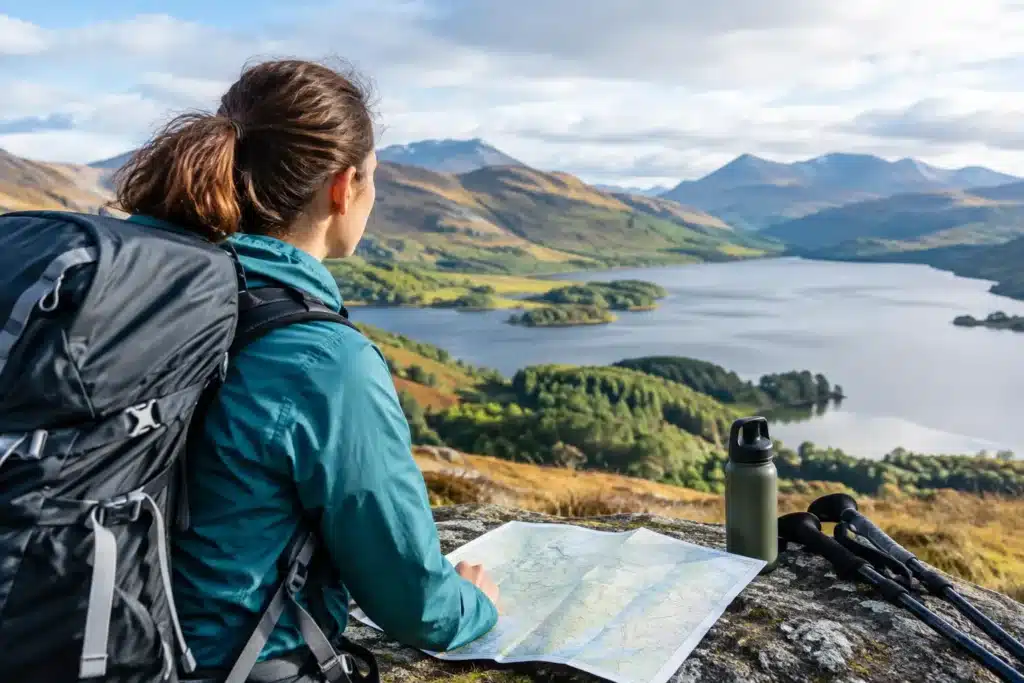
The final few miles into Fort William can feel wonderfully long. Your boots are dusty or soaked, your legs have earned a rest, and the sight of Loch Linnhe is a reminder that you have crossed some of Scotland’s finest walking country. Good West Highland Way preparation makes that finish something to enjoy rather than simply endure.
The route is achievable for first-time long-distance walkers, but it should not be underestimated. Around 96 miles from Milngavie to Fort William, it combines easy lochside paths, rougher trails, sustained climbs, changeable Highland weather and several days of consecutive walking. A little practical planning before you set off gives you more energy for the views, the villages and the well-deserved meal at the end of each day.
Plan your West Highland Way preparation around your pace
Most walkers complete the West Highland Way in five to eight days. Seven days is a comfortable first itinerary for many people, allowing time to settle into the rhythm of the trail without making every day a major effort. Faster schedules can work for experienced walkers with sound fitness, while eight or nine days suit those who want shorter distances, photography stops or a more relaxed holiday.
It is tempting to choose stages by mileage alone, but terrain matters just as much. A 12-mile day on a surfaced path is very different from 12 miles over uneven ground in wind and rain. The section from Rowardennan towards Inverarnan is famously rugged, with slow-going lochside terrain, while the approach over Rannoch Moor can feel exposed when the weather turns.
When booking overnight stops, look at the distance between them, the profile of the day and how much flexibility you need. Popular dates, particularly May, June and September, should be arranged well ahead. Accommodation in small Highland settlements is limited, and leaving every booking until the day can create unnecessary pressure.
Allow for a rest day if it suits your trip
A rest day is not essential, but it can be worthwhile if you are travelling from overseas, carrying a full pack or walking with friends of mixed ability. Crianlarich or Kinlochleven can work well depending on your itinerary. Even a slower morning and a shorter afternoon walk can help tired feet recover.
Train for back-to-back walking days
You do not need to be a mountain athlete, but you do need to be ready to walk day after day. Start several weeks or months before departure, depending on your current activity level. Build up regular walks gradually, then introduce longer outings at weekends.
The most useful training is specific: walk in the boots you intend to wear, carry the weight you expect to carry and include hills where possible. A pair of two consecutive longer walks is especially valuable. It shows how your feet, knees and shoulders cope once the first-day freshness has gone.
If you live somewhere flat, use stairs, inclined paths or a treadmill with an incline alongside longer local walks. Basic strength work for calves, quads, hips and core can also make descents more comfortable. The aim is not to rush the route. It is to arrive able to keep walking safely when the ground is wet and the forecast is less kind than hoped.
Choose kit for wet ground, not just a good forecast
Highland weather is part of the experience, but it deserves respect. A bright morning can become a cold, wet afternoon, particularly on open ground. Your clothing system should keep you comfortable through changes rather than rely on one heavy layer.
A waterproof jacket and waterproof overtrousers are sensible essentials. Choose items that genuinely fit over your walking layers and have been worn before the trip. A warm mid-layer, spare dry socks, hat and gloves belong in your pack even in summer. Insect repellent and a midge net can be useful from late spring through early autumn, especially around still water in the evening.
Footwear is personal. Waterproof walking boots offer ankle support and protection on muddy ground, but trail shoes can suit experienced walkers carrying a lighter load. Whichever you choose, wear them in well before the trail. Brand-new boots are one of the quickest ways to turn a memorable walk into a painful one.
Your daypack should be comfortable, weatherproofed with a pack liner or dry bags, and large enough for water, food, spare layers, waterproofs, first-aid supplies and navigation. Walking poles are optional, yet many walkers appreciate them on the rough banks of Loch Lomond and on long descents. Test them before leaving home rather than learning to use them halfway through a wet day.
Carry reliable navigation and use it
The West Highland Way is well waymarked in many places, but signs can be missed in poor visibility, when chatting with fellow walkers or where paths divide. Do not depend solely on a phone. Carry an appropriate paper map and know how to read it, with a compass as a backup.
A digital map on your phone is useful, provided you download it for offline use and take a power bank. Check the forecast each morning, but also look at wind strength and visibility, not merely the rain symbol. The open sections north of Bridge of Orchy and around the Devil’s Staircase are very different in strong wind from a calm, clear day.
Let someone know your planned destination, particularly if you are walking alone. Keep a small first-aid kit with blister care, pain relief you know you can take, antiseptic wipes and any personal medication. Blisters are best dealt with at the first hot spot, not after they have become painful.
Sort luggage, food and transport before the first day
Luggage transfer can make the route far more enjoyable, especially for walkers who prefer to carry only a daypack. It does add a cost and requires advance organisation, but it can make a seven-day itinerary much more manageable. If you carry everything yourself, be strict about weight. A few unnecessary items feel much heavier after several miles.
Food options vary along the trail. Some stops have shops, cafés and pubs, while others offer fewer choices or have seasonal opening hours. Carry enough snacks for the day, including something salty and something quick to eat when energy drops. Refill water whenever you can, and treat natural water if you plan to use it.
The route is commonly walked south to north, ending in Fort William, where rail and bus connections make onward travel straightforward. If you are leaving a car at the start or travelling with luggage, confirm parking and transfer arrangements before setting off. A smooth first morning is a small but valuable gift to yourself.
Look after your body during the walk
Start the first two days more slowly than you think you need to. The excitement of beginning can encourage an overly quick pace, particularly on the gentler ground from Milngavie. Save something for later in the week, when tiredness can make hills and rough paths feel larger.
Take short breaks before you are exhausted, eat regularly and change wet socks when needed. At the end of the day, dry footwear and clothing as fully as possible, attend to any sore spots and prepare the next morning’s layers before bed. These modest routines make a real difference over a multi-day walk.
Recovery matters too. A proper breakfast, a warm shower, a comfortable bed and somewhere to air wet kit are not luxuries after a long stage. Walkers finishing in Fort William may find a stay at Guisachan Guesthouse particularly useful for its drying room, baggage storage, hearty Scottish breakfast and central location close to the route’s finish.
Leave room for the Highlands themselves
The West Highland Way is not a route to race. Some days will run ahead of plan; others will be slowed by weather, a lingering view over Loch Leven or a friendly conversation at a trail stop. Keep your itinerary organised, but leave enough margin to enjoy it.
Pack carefully, train steadily and make sensible decisions on the day. Then, when Fort William comes into view, you can give the final miles the attention they deserve.