
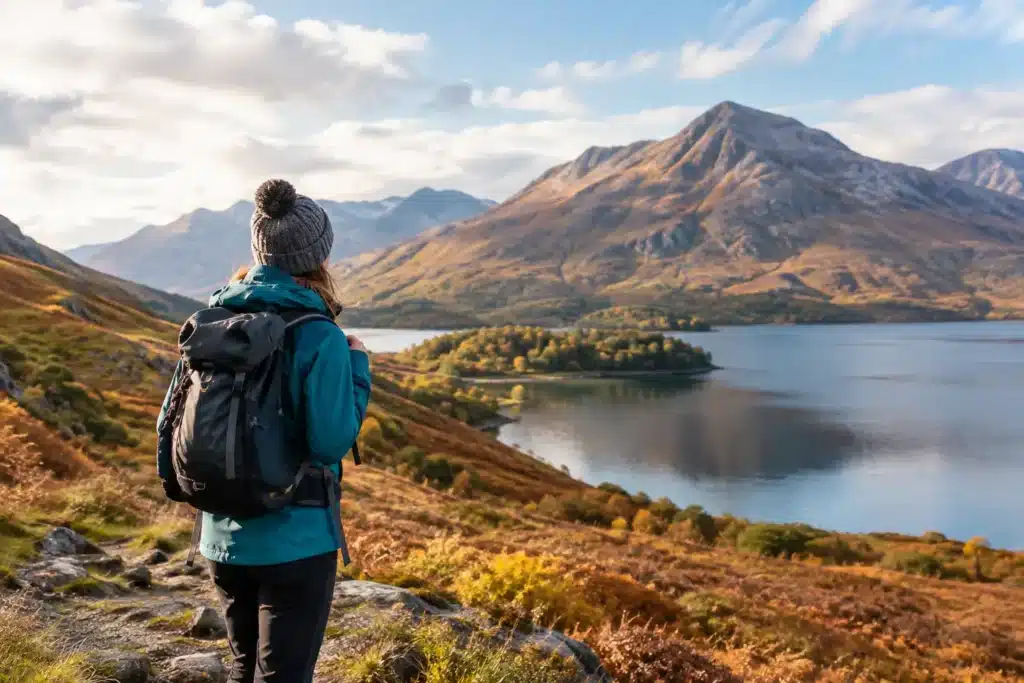
A Scottish Highlands shoulder season guide is less about finding a guaranteed bargain and more about travelling with room to breathe. In spring and autumn, the paths can be quieter, popular viewpoints less crowded and accommodation easier to secure than at the height of summer. The trade-off is simple: Highland weather remains changeable, daylight is shorter in autumn, and some seasonal services run reduced timetables.
For walkers, climbers, cyclists and sightseers, that can be a very worthwhile exchange. With the right clothing, flexible plans and a dependable place to return to, the shoulder season often delivers the Highlands at their most peaceful.
When is the Scottish Highlands shoulder season?
In practical terms, the shoulder season usually covers March to May and September to October. Exact conditions vary widely from year to year and place to place. A bright April day around Fort William can feel wonderfully fresh, while a May morning on Ben Nevis may still bring winter conditions higher up. By late September, the glens begin to turn to autumn colour, but an Atlantic weather system can arrive quickly.
March and April suit visitors who enjoy crisp air, fewer people on the trails and the first longer days after winter. Higher routes may still hold snow and ice, so mountain objectives need proper assessment rather than optimistic packing. May often brings more settled spells and greener landscapes, although it can also mark the start of midge season.
September is a favourite for many experienced walkers and touring visitors. The main summer rush has eased, the days are still usefully long, and conditions can be excellent for lower-level walks, cycling and scenic journeys. October brings dramatic colour, cooler evenings and a more pronounced need to plan around daylight. It is an especially good month for shorter walks, lochside drives and unhurried days exploring the area.
Why shoulder-season travel works well
The Highlands are not a theme park that improves simply because the sun is out. Mist on the hills, a blustery loch shore and low autumn light can all be part of the experience. Travelling outside peak summer gives more space to appreciate those moments without feeling hurried by traffic, booked-out restaurants or busy car parks.
For active holidays, a quieter base can make the practical details easier too. You may have more choice of room types, better availability for a multi-night stay and less pressure to arrange every element months ahead. That said, weekends, school holidays, local events and popular rail dates can still be busy. Glenfinnan, the Jacobite Steam Train season and the West Highland Way continue to attract visitors well beyond July and August.
The season is particularly well suited to guests who can adapt their plans. If cloud is sitting heavily on Ben Nevis, make it a day for the Nevis Range gondola area, a lower woodland walk, a museum visit or a drive through Glen Coe instead. Saving a summit attempt for a clearer day is good judgement, not a compromise.
Weather: plan for four seasons, not one forecast
Highland weather deserves respect at any time of year. During the shoulder months, it is common to experience sun, rain and strong wind in a single day, especially around the mountains and coast. Check a detailed local forecast before setting out, then look again on the morning itself. Forecasts describe a likely pattern, not a promise.
For hillwalking, the conditions at sea level in Fort William are not the conditions on a high ridge. Temperature drops with altitude, wind chill can be significant, and cloud can reduce visibility quickly. Snow, ice and cornices may remain on high ground into spring, while autumn storms can make exposed routes unpleasant or unsafe. If you do not have winter hill skills and the right equipment, choose a lower route when conditions demand it.
A small amount of preparation makes wet days far more comfortable. Waterproof footwear and a properly waterproof jacket matter more than a fashionable outer layer. Carry spare warm clothing, food, water, a charged phone and a paper map or downloaded mapping. For longer outings, tell someone your intended route and your expected return time.
What to pack for spring and autumn in the Highlands
Packing for the shoulder season is about usable layers rather than filling a suitcase. Clothing that dries quickly is particularly helpful after a wet walk, cycle or sightseeing day. A good kit list should include:
- Waterproof jacket and overtrousers, not just a showerproof coat
- Walking boots or sturdy shoes with grip, plus spare socks
- Warm mid-layers, hat and gloves, even in May or September
- Daypack with water, snacks, map, torch and power bank
- Midge repellent and a head net from late spring into early autumn
Midges are most active in still, damp conditions, usually from late spring through early autumn. They are less of a problem in a breeze, during heavier rain and in cooler weather, but it is sensible to be prepared. They should not put you off visiting – they are simply one more reason to keep a flexible plan.
If you are walking the West Highland Way, cycling or climbing, think beyond what you will wear during the day. Wet boots, waterproofs and packs need somewhere to dry, and bikes need secure storage. At Guisachan Guesthouse, guests have access to a drying room and secure bicycle storage, alongside en-suite rooms, a hearty breakfast and free parking – useful comforts after a day spent outside.
Choose the right kind of day
Shoulder season is ideal for mixing ambitious outdoor days with gentler alternatives. A clear, calm forecast may be your chance for a bigger hill day or a long section of the West Highland Way. A wet or windy forecast can be just as rewarding when matched to the right plan.
Around Fort William, lower-level woodland routes, lochside paths and short walks can offer shelter and interest when higher ground is in cloud. The Glenfinnan area remains a strong option for scenery, although popular viewpoints can still be busy and parking requires care. A ride on the scenic railway, time in local cafés, or a drive through Glen Coe can turn a poor mountain-weather day into a memorable part of the holiday.
Families and less experienced walkers should be especially realistic about pace. Autumn leaves, mud and shorter daylight hours make routes take longer than expected. In spring, swollen burns and slippery ground may alter a familiar path. Turning back early is always preferable to pushing on because the route looked straightforward online.
Transport, roads and seasonal opening times
A car gives the greatest freedom in the Highlands, but it does not remove the need for planning. Single-track roads require patience and correct use of passing places. In poor weather, allow more time than your map suggests, keep fuel levels sensible and never stop in a passing place for photographs.
Public transport can work well for point-to-point walkers and visitors based in Fort William, particularly where rail and bus services connect with larger routes. However, shoulder-season timetables and attraction opening hours may differ from summer arrangements. Check current times before committing to a day out, especially if your plan depends on a final train or bus.
For the Jacobite Steam Train and other highly sought-after experiences, shoulder season does not always mean last-minute availability. Operating dates are seasonal, and demand can remain high. Booking key experiences in advance is sensible, while leaving your walks and drives flexible around the weather.
Make accommodation part of the plan
After a cold, wet or unexpectedly long day, the quality of your base matters. Prioritise a location that reduces unnecessary driving, offers practical facilities and gives you a comfortable place to reset. For walkers, that may mean a drying space and an early breakfast. For cyclists, secure storage is more valuable than a decorative extra. For touring guests, parking and straightforward access can make the next morning much easier.
It is also worth considering your arrival time. Highland roads can feel longer in darkness, particularly after a flight or a full day of driving. An overnight stop in a well-connected town gives you time to settle in, check the forecast and make a sensible plan for the following day. A warm breakfast before setting out is a small detail that can make a substantial difference when the weather is cool.
The shoulder season rewards visitors who leave a little space in the itinerary. Bring the right layers, keep an eye on the hills, and let the best weather guide your biggest plans. The Highlands will still be there when the cloud lifts – and often look all the better for having waited.