
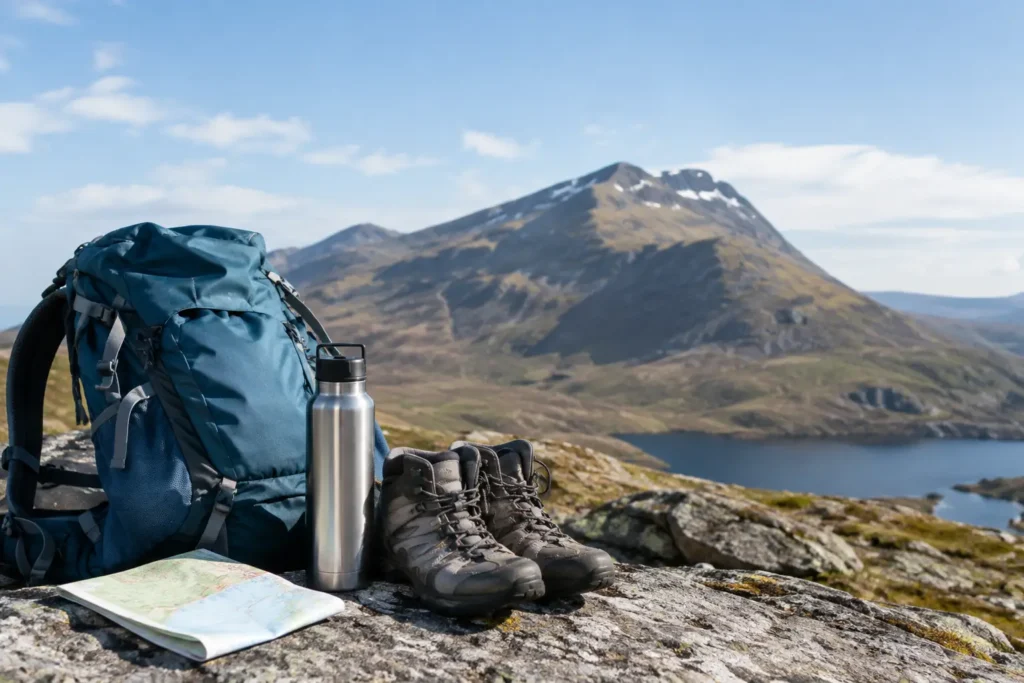
The summit of Ben Nevis can look close from Fort William, but it is a full mountain day, not a quick walk between sightseeing stops. Good Ben Nevis preparation gives you the best chance of enjoying the climb, making sound decisions when conditions change and returning with enough energy for a proper meal and a warm, dry evening.
For many first-time visitors, the Mountain Track is the most straightforward way up. Straightforward does not mean easy. The route gains around 1,350 metres, covers rough ground and can feel very different above the halfway point. Give the mountain the time, kit and respect it requires.
Ben Nevis preparation starts with an honest plan
Start by deciding whether the day suits your party, rather than fitting the mountain around a fixed itinerary. The Mountain Track is generally the right choice for walkers without scrambling experience, but it remains a demanding uphill and downhill journey. Most people should allow seven to nine hours, with extra time for a relaxed pace, photographs, rests and poor visibility.
Look closely at everyone’s experience, current fitness and confidence on uneven ground. A regular hillwalker may find the route long but manageable in fair conditions; a visitor unused to steep paths may need more breaks and a longer day. Children can enjoy Ben Nevis with suitable preparation, but the objective should be appropriate for their age, stamina and enthusiasm. There is no prize for pressing on when someone is cold, exhausted or unhappy.
Set a turnaround time before you leave. This is particularly useful in summer, when a late start and a bright morning can create false confidence. If you have not reached a sensible point by your agreed time, turn back. The summit will still be there on another visit.
Choose the route for your ability
The Mountain Track begins near the Glen Nevis Visitor Centre and is the usual route for people walking Ben Nevis for the first time. It is steep in places, stony underfoot and becomes more exposed as it climbs. In cloud, the upper mountain can be disorientating, even on a well-used line.
Other routes, including the Carn Mor Dearg Arete, are for experienced mountain-goers with the right skills, judgement and conditions. They should not be chosen simply to avoid crowds or to make the day feel more adventurous. Technical terrain, wind and limited visibility raise the stakes quickly. If you are unsure, choose the Mountain Track or save the summit for a future trip with a qualified guide.
Check the mountain weather, not just Fort William
A dry forecast in town is not a reliable forecast for the summit. Ben Nevis creates its own challenges: cloud can settle in, rain can arrive unexpectedly and temperatures can be far lower at the top than at sea level. Strong wind makes exposed sections tiring, while rain on rock and loose stones makes both ascent and descent slower.
Check a dedicated mountain forecast the evening before and again on the morning of your walk. Pay attention to wind speed and direction, cloud base, temperature, rainfall and visibility. A forecast can still change, so bring the layers that allow you to respond rather than hoping a lightweight jacket will be enough.
Winter is a different undertaking. Snow, ice, cornices and short daylight hours mean that winter ascent requires specialist equipment and the ability to use it. Crampons and an ice axe are not safety props to carry without training. If winter conditions are present, consider a guided day or choose a lower-level walk that better matches your experience.
Be ready to change the plan
Turning back is good mountain judgement, not a failed attempt. Thick cloud, worsening wind, a navigation concern or a member of the group feeling unwell are all valid reasons to descend. Many excellent Highland days take place below the summit, whether that means exploring Glen Nevis, walking by Lochaber’s quieter trails or enjoying a rest day before another adventure.
Tell someone where you are going, which route you intend to use and when you expect to return. Keep your plan simple and accurate. Mobile phone coverage can be unreliable on the mountain, so do not rely on a mobile phone as your only means of navigation or communication.
What to pack for Ben Nevis
The right kit is about staying comfortable enough to make sensible choices. Wear walking boots with supportive soles that you have already used on longer walks. New boots, trainers with little grip and cotton clothing can make a hard day unnecessarily difficult.
Your rucksack should hold the following essentials:
- A waterproof jacket and waterproof trousers, plus warm insulating layers
- A map and compass, with the knowledge to use them, as well as a fully charged mobile phone
- Food for a full day, including a few easy-to-eat high-energy snacks
- Enough water for your needs, with more on warm days
- A small first-aid kit, headtorch, whistle and emergency survival bag
- Hat and gloves, even in summer, plus sun protection when the forecast calls for it
The amount of food and water depends on the day, your pace and the temperature, but it is better to carry a little more than finish the final descent depleted. Eat and drink regularly rather than waiting until you feel hungry or thirsty. On a long climb, small and frequent breaks often work better than one extended stop that leaves you chilled.
Walking poles can be helpful, especially on the descent, where tired legs and loose stones are a common combination. They are optional, but many walkers appreciate the extra balance. Make sure they are adjusted and familiar before the day itself.
Navigation matters most near the top
The upper plateau has been the scene of serious navigational errors when cloud closes in. At the summit, ruins and cairns can make it tempting to follow another person or a vague trail. Do not assume other walkers know the route, and do not depend on a mobile phone signal to find your way down.
Before setting off, study the key features of your route and understand how you will retrace it. Carry a suitable paper map, protect it from rain and keep your compass accessible rather than buried at the bottom of your bag. A GPS device or mapping app can be a useful backup, but battery life, cold weather and damaged screens all have limits.
If you become uncertain, stop early, shelter the group from the wind where possible and work out your position before moving on. Rushing because you want to get down is how a manageable problem becomes more serious. In an emergency, call 999 or 112 and ask for Police, then Mountain Rescue.
Plan the practical parts of your mountain day
An early start makes the day calmer. It gives you more daylight, more time to move at your own pace and more flexibility if weather delays you. Arrive with breakfast sorted, boots fitted and your bag packed the night before, rather than trying to make decisions in a car park.
Fort William is a convenient base because supplies, transport, evening meals and lower-level alternatives are close at hand. For guests staying at Guisachan Guesthouse, a hearty breakfast, drying room, baggage storage and practical help with local arrangements can make the logistics easier before and after a wet or demanding day.
Avoid treating the summit as the only part that counts. The descent requires concentration, and tiredness often appears when people assume the hard work is over. Keep enough food and water for the return, put on warmer layers before you become cold and allow time for the final walk back to your transport.
A well-prepared Ben Nevis day is not about carrying every gadget or forcing a summit at all costs. It is about reading the conditions, looking after your group and giving yourself permission to enjoy the mountain at the pace it allows.