
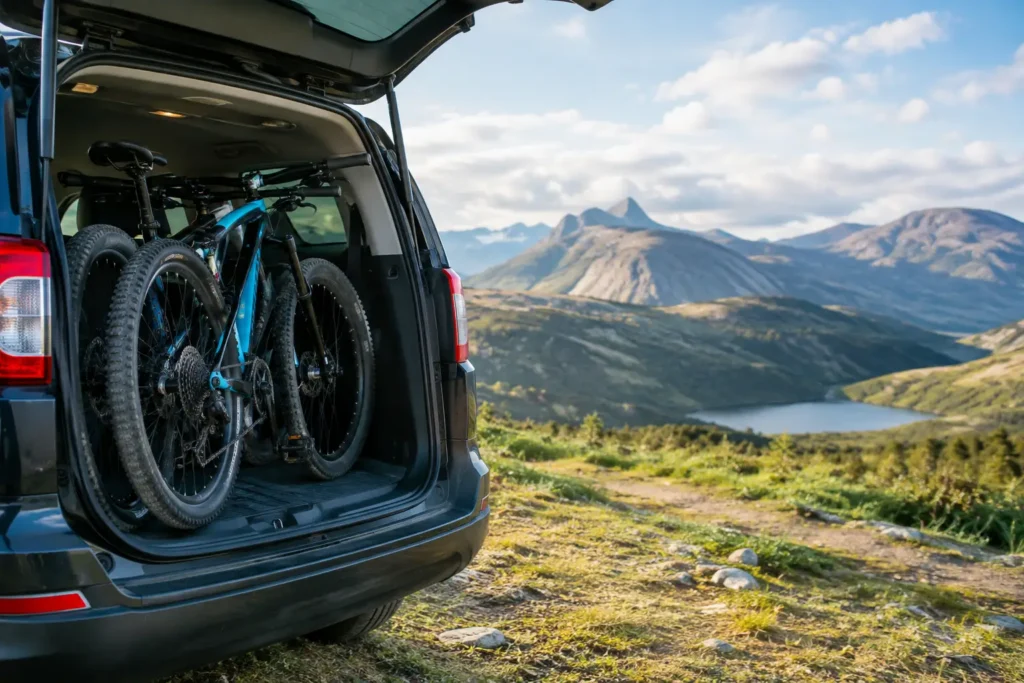
A cycle tour can be planned around dramatic climbs, quiet glens and rewarding café stops, yet storing bicycles during Highland tours deserves just as much thought. After a long day in changeable weather, the last thing most riders want is to carry a muddy bike through their room, leave it exposed on a car rack, or worry about it overnight. A secure, dry place for the bike makes the next morning simpler – and protects equipment that may be carrying you through hundreds of miles of Highland roads and trails.
Why secure cycle storage matters in the Highlands
Highland conditions are hard on bicycles. Rain can arrive quickly, grit collects on chains and brakes, and a bike left outside overnight may stay wet long after the clouds have cleared. Even when your bicycle is locked to a car or rail, it remains vulnerable to weather, accidental damage and unwanted attention.
This is especially relevant on point-to-point journeys. Riders tackling sections of the Caledonia Way, touring between Fort William and Oban, or combining road cycling with mountain biking at Nevis Range often travel with panniers, lights, helmets and wet clothing. Keeping the bike and its essential kit together, safely and sensibly, avoids a frustrating start to the following day.
Secure storage is not simply a nice extra. For many cycling visitors, it is as useful as parking or a good breakfast. It lets you rest properly, knowing your bike is not locked outside in the rain.
Choosing accommodation for storing bicycles during Highland tours
Before booking, ask a few direct questions about cycle storage. “Bike-friendly” can mean different things at different properties. Some may allow a bicycle in a porch or shed, while others offer a dedicated, lockable storage area. The latter is generally the better choice for a touring bike, e-bike, mountain bike or any cycle carrying expensive equipment.
Look for storage that is indoors or properly sheltered, accessed only by guests or staff, and practical to reach without taking the bike through bedrooms or public areas. If you are travelling as a group, check that there is room for every bicycle rather than assuming a small storage space can take several large bikes.
It is also worth asking about arrival and departure arrangements. A late finish, a delayed train or a long day on the trail should not leave you trying to find somewhere safe for the bike after dark. Accommodation with clear check-in guidance and an attentive host can make a real difference when plans change.
At Guisachan Guesthouse, secure bicycle storage and a drying room are available for guests travelling with outdoor equipment. For cyclists using Fort William as a base or an overnight stop, this means less time managing wet kit and more time recovering for the next stage.
Think beyond the bicycle itself
A bicycle is only part of the picture. Panniers may contain maps, charging cables, waterproofs and spare layers; helmets and shoes are awkward to dry in a small bedroom; and a damp jacket left bundled in a bag may still be wet the following morning.
A drying room is particularly welcome after a soaked ride. It gives wet outer layers, overshoes and gloves a chance to dry away from your room, helping to keep your accommodation comfortable as well as your kit usable. Do not place delicate items directly on a heat source, and remove batteries, electronics and valuables before leaving panniers in storage.
If you are carrying an e-bike battery, check the property’s arrangements in advance. Batteries should be stored and charged in line with the manufacturer’s guidance, rather than being left in a cold, damp shed or connected to an unsuitable extension lead. A reputable accommodation provider will be clear about what is possible.
Prepare your bike before leaving it overnight
You do not need to carry out a full service at the end of every day, but five quiet minutes can prevent trouble building up. Wipe excess water and road grime from the chain, frame and brakes, particularly after wet roads or forest tracks. If the chain is noisy or visibly dry, apply a suitable lubricant sparingly, then wipe away the excess so it does not attract more grit.
Check that bags are closed, lights are removed and nothing is loose on the handlebars. If your bike has a computer, GPS unit or detachable pump, take it to your room. These small items are easy to overlook and are usually more convenient to charge indoors.
Use your own lock even where storage is secure. This is not a judgement on the accommodation – it is sensible touring practice and provides an additional layer of reassurance. A compact D-lock or a quality folding lock is often easier to manage than a heavy chain, although the right choice depends on how much security you need during daytime stops too.
Before setting off each morning, give the bike a brief once-over. Spin both wheels, squeeze the brakes, check tyre pressure and make sure luggage is firmly attached. Highland roads can be rough in places, and a quick check before breakfast can save a roadside repair later.
Avoid leaving bikes on vehicles overnight
A rear rack is useful for getting to the start of a ride, but it is rarely the best overnight storage solution. Constant rain can affect moving parts and luggage, while bikes mounted on the back of a vehicle are visible from the road. They can also make it difficult to access the boot or reverse safely in a busy car park.
If you have driven to the Highlands, unload your bicycles once you arrive and place them in secure storage. Remove all panniers and detachable accessories from the vehicle too. This helps protect your equipment and reduces the chance of a rushed, poorly organised departure.
For those travelling with roof-mounted bikes, remember the height before entering covered parking or passing under low structures. It sounds obvious, but a tired rider after a full day in the saddle is more likely to forget.
Plan for wet weather without overpacking
The Highlands reward preparation, but there is no need to bring a whole workshop. A small touring kit usually covers the essentials: two spare inner tubes or a puncture repair kit, tyre levers, a multi-tool, a pump, a chain quick-link, lights and a few cable ties. For tubeless set-ups, carry the plugs and sealant needed for your own system.
Pack this kit in a waterproof bag within a pannier rather than loose at the bottom. Keep dry clothes separate from tools and wet layers. This makes unpacking at the end of the day quicker and means you are not searching through damp gloves for a clean top.
Your route should also influence what you carry. Road riders on the A-roads and quieter coastal routes may prioritise visibility and puncture protection. Mountain bikers and gravel riders heading for rougher terrain may need more tyre clearance, a stronger repair kit and a plan for cleaning mud away before storage. There is no single perfect set-up for every Highland tour.
Use Fort William as a practical cycling base
Fort William works well for riders who prefer a settled base rather than moving accommodation each night. You can ride local routes, visit Nevis Range, explore towards Glen Nevis or take a rest day without repacking every pannier. It also provides useful transport links for cyclists combining rail travel, a one-way route or onward travel elsewhere in the Highlands.
A comfortable room, hot shower, substantial breakfast and somewhere to dry clothing can be as valuable as an extra few miles on the route plan. If the weather turns particularly severe, having a welcoming guest lounge and a resident bar nearby makes an enforced shorter day feel rather less like a compromise.
When choosing a base, consider the practical details together: secure cycle storage, parking if you are driving, access to food, the ability to dry kit, and a location that does not add unnecessary miles at the start and end of each day. Small decisions made before arrival can make a demanding trip feel far more relaxed.
A simple overnight routine for touring cyclists
At the end of the ride, put the bike into secure storage, remove valuables and open panniers to air any damp contents. Hang wet outer layers in the drying room where available, rather than leaving them compressed in a bag. Then clean up, eat well and look at the following day’s route while you still have time to adjust it for the forecast.
Check these four points before bed:
- your bicycle is locked and no accessories are left on it;
- batteries, lights and navigation devices are charging safely indoors;
- wet clothing has been separated from dry clothing and luggage;
- the next day’s route, weather and opening times have been checked.
This routine is uncomplicated, but it reduces the small stresses that can drain the enjoyment from a multi-day cycling trip.
A Highland tour is meant to leave room for unexpected views, changing weather and the satisfaction of arriving under your own power. Give your bicycle the same care as the rest of your journey, and each overnight stop becomes a genuine chance to rest, dry out and set off ready for whatever the road brings.