
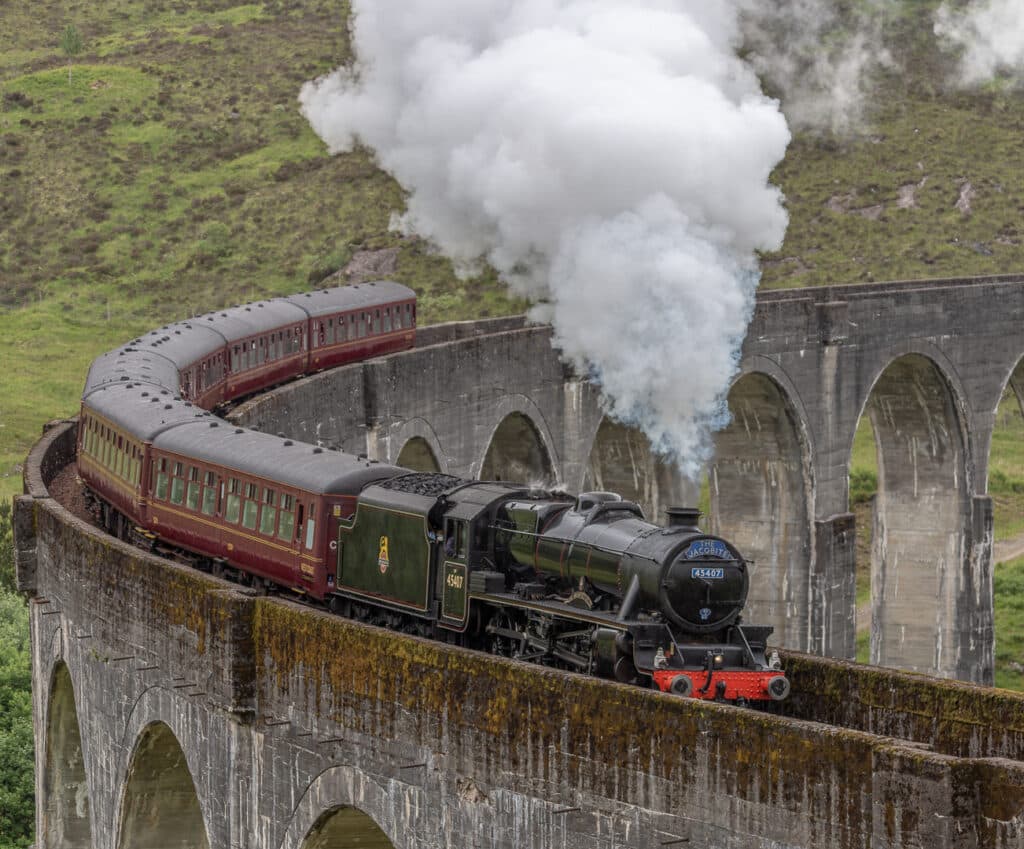
The Glenfinnan Viaduct is only a short journey from Fort William, but a good Glenfinnan day trip needs more thought than simply arriving for a photograph. Train times, limited parking, Highland weather and the walk to the viewpoint can all shape the day. Give yourself room to slow down and Glenfinnan offers far more than a glimpse of a famous railway bridge.
For visitors based in Fort William, it is an especially rewarding outing: close enough for a relaxed half-day, yet rich enough to fill a full day with a scenic rail journey, lochside walking and a little Highland history.
Getting to Glenfinnan from Fort William
Glenfinnan lies around 17 miles west of Fort William on the A830, the Road to the Isles. By car, allow roughly 30 minutes in normal conditions, though summer traffic, cyclists, coaches and weather can add time. The road is straightforward but scenic, so it is worth resisting the urge to rush. Leave early if you want to park near the visitor centre or time your visit around a train crossing the viaduct.
The train is a very good alternative. Glenfinnan station sits on the West Highland Line, with services between Fort William and Mallaig. It is a lovely journey in its own right, passing lochs, wooded slopes and open Highland ground. From the station, the viaduct and village are within walking distance, although paths may be wet and uneven after rain.
The Jacobite Steam Train is the service many visitors hope to see crossing the viaduct. It operates seasonally and its timetable can change, so check the current running dates and times before building your day around it. Do not assume that a photograph seen online reflects the day you are visiting. Regular ScotRail services also use the line, and watching any train cross this remarkable structure is still a memorable moment.
A sensible Glenfinnan day trip itinerary
An early start makes the day more comfortable, particularly between late spring and early autumn. Arrive in Glenfinnan with time for the viewpoint walk before the train is expected. That way, you are not hurrying uphill in a crowd or missing the crossing because of a full car park.
Start at the Glenfinnan Visitor Centre area, where there is parking, toilets and useful interpretation. Facilities, opening hours and charges can vary by season, so plan for the possibility that services may be reduced outside the main visitor period. Bring water and a snack even for a short visit, especially if you are travelling by public transport.
From here, follow the signed path towards the viaduct viewpoint. The route is not long, but it is a proper outdoor walk rather than a pavement stroll. Expect a climb, rough ground and mud after wet weather. Sturdy footwear is preferable to trainers, and a waterproof layer is sensible whatever the forecast says at breakfast.
The main viewpoint looks across the curve of the viaduct towards the surrounding hills. Arrive at least 20 to 30 minutes before the train is due, as the best spots can become busy. Please stay on the path and behind any barriers. The slopes are steep in places, and cutting across ground to find a quieter angle damages the hillside and creates unsafe routes for others.
After the train has passed, walk back towards the village rather than leaving immediately. This is when Glenfinnan often feels most peaceful.
Visit the Glenfinnan Monument
The monument stands on the shore of Loch Shiel and commemorates the Jacobite rising of 1745. It marks the place where Prince Charles Edward Stuart raised his standard and called supporters to his cause. The setting is striking, but the history is not a simple tale of romance. The rising ended in defeat at Culloden, with profound consequences for Highland communities and culture.
Take time to read the interpretation around the site. It gives the viaduct visit a wider sense of place, connecting the well-known film location with a landscape of real historical significance. On calm days, the view along Loch Shiel is reason enough to linger.
Allow time for a lochside walk or a quiet lunch
If you have chosen a full day, continue exploring on foot around the monument and loch shore, or return to the visitor centre for a break before heading back. The scale of the landscape is best appreciated when you step away from the busiest viewpoint.
Those travelling with children may prefer to keep the plan simple: viewpoint, monument, picnic and a gentle walk, with plenty of time for snacks and toilet stops. For walkers, Glenfinnan can be combined with longer local routes, but only if you have suitable maps, clothing and enough daylight. This is not the place to extend a walk casually when low cloud or heavy rain is moving in.
When is the best time to visit?
There is no single best season for a Glenfinnan day trip. Summer brings longer days, greener hills and the greatest chance of seeing seasonal steam services, but it also brings the largest crowds. Parking and the viewpoint are busiest around advertised train times.
Spring can be quieter, with fresh colour on the hills and changing conditions that make the landscape feel particularly dramatic. Autumn offers rich tones and often clearer light, though daylight shortens quickly. Winter can be wonderfully still, but expect limited facilities, icy paths, short days and weather that may disrupt travel.
Whatever the month, check the forecast for Glenfinnan rather than relying only on a Fort William forecast. Conditions can change over a few miles. Low cloud may hide the tops while rain makes the path slippery, and a bright morning can turn sharply colder beside Loch Shiel.
Practical details that make the day easier
Glenfinnan is popular for good reason, but it is still a small Highland village. A little preparation helps everyone enjoy it. Mobile signal can be patchy, so save train times, parking information and maps before setting off. If you are driving, fill up in Fort William or another larger stop rather than expecting services at Glenfinnan.
Bring layers, waterproofs, comfortable walking shoes and a charged phone. A small rucksack is useful for water, lunch and an extra warm layer. Midges can be troublesome in still, damp conditions from late spring through early autumn, so repellent is worth carrying.
Please park only in designated spaces. Roadside parking can obstruct local access and emergency vehicles, while verge damage is hard on the landscape. If the main car park is full, do not create your own space on a narrow road. Consider arriving at a quieter time, using the train, or adjusting your plan.
Visitors hoping to photograph the viaduct should also keep expectations realistic. The weather may be misty, the train may be late, and a crowd may already be waiting. Often the strongest memory is not the perfect picture but the sound of the train carrying across the glen, followed by the quiet of the loch and hills.
Staying in Fort William for the trip
Fort William makes a practical base because you can choose the weather window that suits you rather than forcing everything into a long onward drive. A hearty breakfast before an early departure is useful, and returning to a warm room after a wet viewpoint walk is even better. At Guisachan Guesthouse, guests also have free parking, EV charging, a drying room and secure cycle storage – useful details for travellers fitting Glenfinnan around a walking, cycling or touring holiday.
A Glenfinnan visit works particularly well after a demanding day on Ben Nevis or the West Highland Way, when a scenic train journey and a modest walk feel more appealing than another major route. Equally, it can be the gentler day in a busy Highland itinerary.
Leave a little unplanned time at the end of your visit. A change in light on Loch Shiel, a passing train or a break in the cloud can be the part of Glenfinnan you remember most.